Creating an accessible home environment is not just about convenience; it’s also a way to ensure that everyone, regardless of their mobility needs, can navigate and enjoy the space with ease. If someone you love relies on mobility aids to get around, then making thoughtful adjustments to your living space can make a world of difference.
In this guide, I share ten practical tips you can take to enhance your home’s accessibility.
1. Clear The Pathways
The first step to a more accessible home is to declutter your living space to make it safer and easier to navigate. Clear pathways are essential for individuals using mobility aids like wheelchairs or walkers. Remove obstacles and trip hazards such as furniture, cords, and decorative items that might obstruct movement. This step lays the foundation for a more accessible environment.
2. Rethink Your Furniture And Its Placement
Consider arrangement of your furniture carefully. If necessary, reconfigure it to ensure that there’s enough space for people to pass through easily, particularly if you have a family member who uses a lightweight wheelchair. Furniture with rounded edges can be safer and more comfortable to manoeuvre around. If your household accessibility demands require it, it may be time to get rid of or change some of your furniture to make more space for movement. If you are looking at new furniture, adjustable-height tables, chairs and counters can accommodate both standing and seated individuals. Chairs with armrests and sturdy backs provide comfort and stability.
3. Provide Adequate Lighting
Proper lighting is crucial for accessibility as well-lit spaces improve visibility and can reduce the risk of accidents occurring. Install bright, energy-efficient lights in key areas like hallways, entryways, and staircases. Motion-sensor lighting can be particularly helpful, allowing you to move around safely without searching for switches. Lights which detect motion and only activate in low light levels, i.e. at night, are really cheap to buy and are great for everyone, not just those with accessibility needs.
4. Consider Your Entryways
Mobility aids like wheelchairs and walkers play a significant role in accessibility so you need to ensure that doorways, hallways, and entrances are wide enough to accommodate these comfortably. Installing ramps or lifts for entryways with stairs can be a game-changer, granting easier access to all. If you live in a council or housing-association owned building, you can talk to them to discuss making these changes. If structural changes aren’t feasible, consider temporary threshold ramps that can be easily put in place when needed. Also, ensure that any doormats lie flat to prevent tripping hazards.
5. Install Grab Bars And Handrails
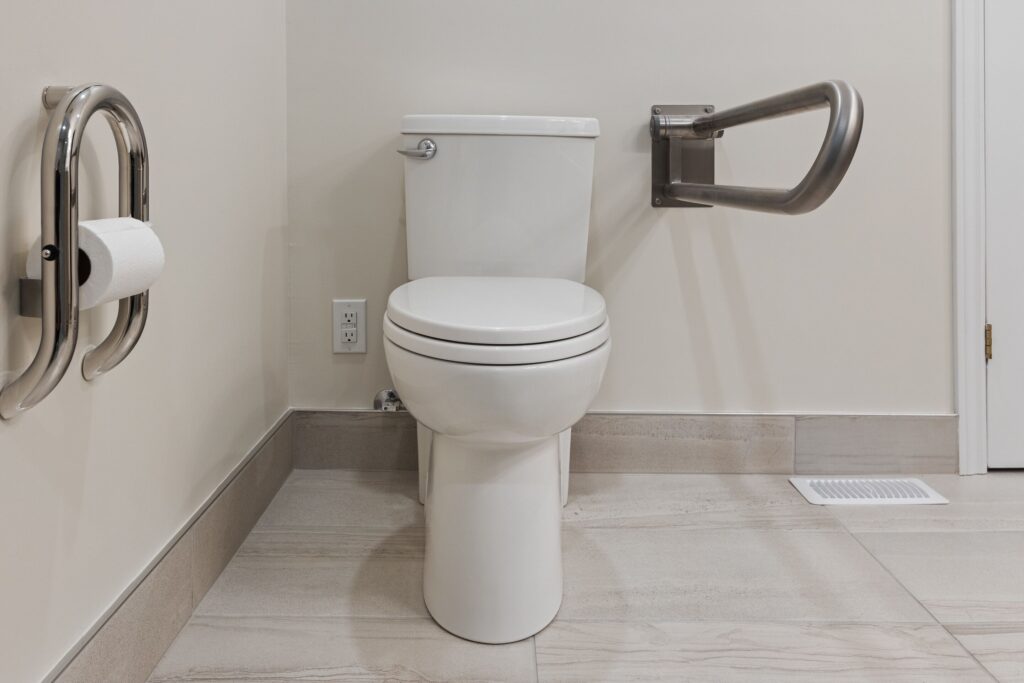
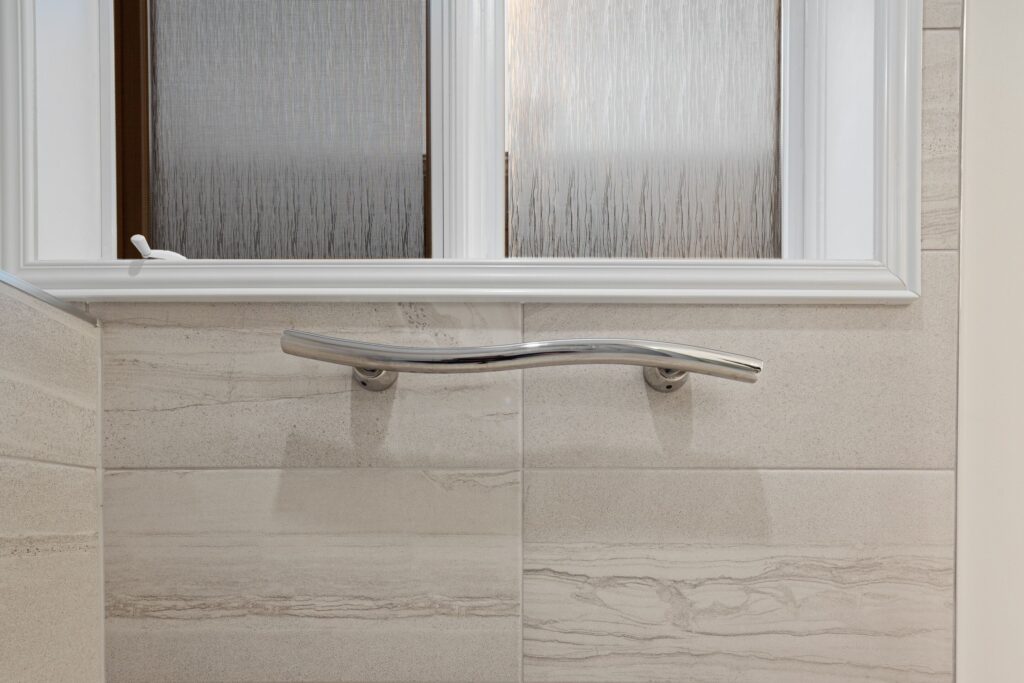
Grab bars are indispensable in promoting independence and preventing falls and strategically placed grab bars and handrails can offer stability and support throughout the home. Install them – or, if you’re not confident in your DIY, then have them installed by a professional, in areas where balance or slipping might be an issue, such as bathrooms, showers, and near stairs.
6. Opt For Slip-Resistant Flooring
Slippery floors can pose a hazard for everyone young and old, but especially for the elderly and those with mobility challenges. Opting for slip-resistant flooring materials like textured tiles or vinyl that provide grip can minimise the risk of accidents happening. However, bear in mind that smooth, level surfaces are essential for smooth wheelchair movement.
7. Create Accessible Bathrooms
Bathrooms can be a challenge for individuals with mobility needs but fortunately there are lots of options available. For example, you can install a walk-in bath or a roll-in shower with a fold-down bench, with a handheld showerhead for maximum accessibility. Raised toilet seats and easy-to-reach storage can further enhance comfort and convenience as well as rocker light switches and slip-resistant flooring.
Lever taps are much easier to operate than those that you twist, so think about replacing these on sinks and baths.

8. Make Kitchen Modifications
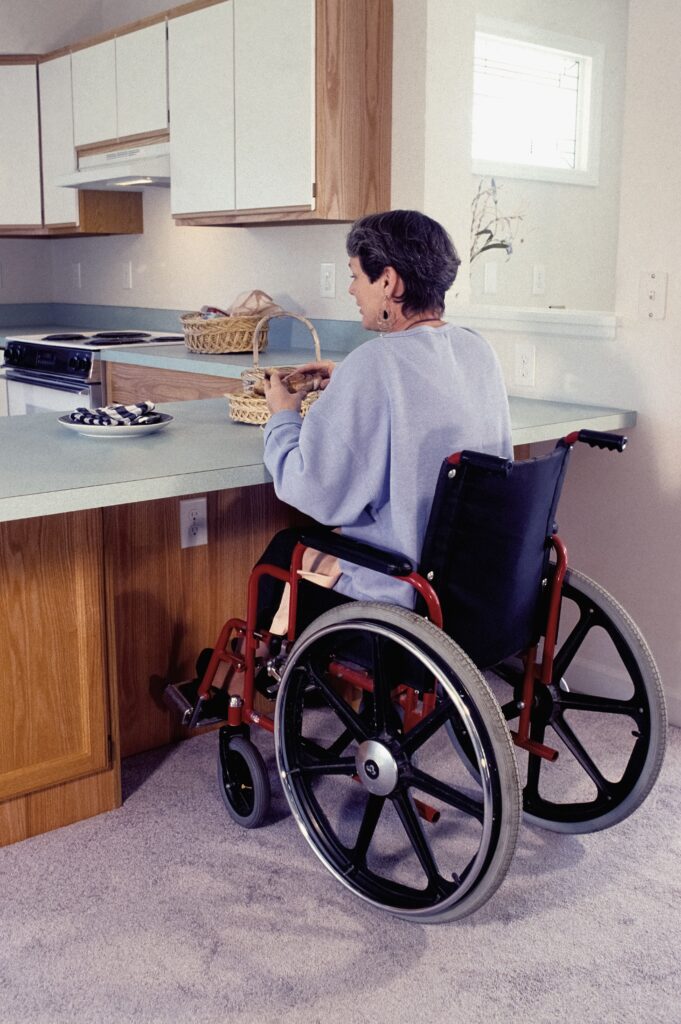
In the kitchen, lower countertops can make food preparation more accessible for individuals in wheelchairs. Pull-out shelves and drawers provide easy access to items. If a kitchen remodel isn’t on the cards, then simply reorganising to store frequently used items within reach will reduce the need to stretch or bend.
9. Replace Knobs With Lever Handles
Replace traditional doorknobs with easier to operated lever handles which are great for people with limited hand strength or dexterity. They’re also more convenient for individuals carrying items in their hands or using mobility aids as they can be operated with an elbow.
10. Always Consider Your Personal Circumstances
Of course, while these tips offer general guidance, remember that accessibility needs can vary widely. Take the time to assess your specific requirements and preferences and think about how things might change in the future. Consult with professionals if needed to ensure that modifications are made correctly and safely and if you aren’t confident in your DIY skills then it’s always preferable to call in an expert.
In conclusion, creating a more accessible home for your family requires a combination of thoughtful planning and practical adjustments. By incorporating these modifications, you can transform your living space into a welcoming environment that accommodates everyone’s needs.
This post is in conjunction with Complete Care Shop, but all thoughts and opinions are my own.