The tradwife phenomenon began as a largely American social media trend but, as with everything annoying like gender reveals, obnoxious Halloween decorations and Black Friday sales, it was only a matter of time before it made its way over here. We are talking women in flowing dresses, enormous kitchens, homemade bread and husbands who earn all the money while their wives devote themselves to domestic bliss.
At least that’s the Instagram version. The reality, as BBC One’s new documentary Young, British and Tradwife demonstrates, is less glamorous. In it, filmmaker Poppy Jay meets three British women who have embraced different versions of traditional marriage, attempting to understand why women in 2026 would willingly reject the freedoms that generations before literally died to secure.

One statistic mentioned in the documentary suggests that 79% of women are attracted to the relaxed lifestyle portrayed by tradwives, and even with unhealthy levels of feminist rage, I can understand it.
Who doesn’t occasionally fantasise about not having to go to work? About getting up when you fancy, pottering around the house and spending your days baking sourdough rather than sitting through meetings that definitely could have been emails and suffering through some bellend microwaving fish in the office?
Women are exhausted. We’re expected to have successful careers, raise well-adjusted children, maintain beautiful homes, look attractive, exercise, cook nutritious meals and somehow find time for ourselves. So I can actually understand why, when you’re tired and pissed off, opting out of employment sounds rather appealing. Whether spending your days looking after children and cleaning up after everyone is actually relaxing is another matter entirely.
I went into this documentary fully expecting to hate everyone involved. Instead, I found myself liking one woman, wanting to shake another, feeling rather sorry for the third and developing a visceral dislike of a man with a beard that looks like someone has glued pubes to his chin. It’s quite the journey.
Meghan: The tradwife I didn’t hate
The first woman Poppy meets is Meghan, who lives with her husband Joseph and their children. I expected to dislike Joseph immediately, because I have a fairly low tolerance for men who think being born with a penis automatically qualifies them to run a household. But he was surprisingly inoffensive and Meghan seemed perfectly happy with the arrangement they’d chosen. Their house wasn’t particularly immaculate, either. There was clutter, there were children, and it looked like an actual family lived there rather than a set designed to sell beige linen dresses.
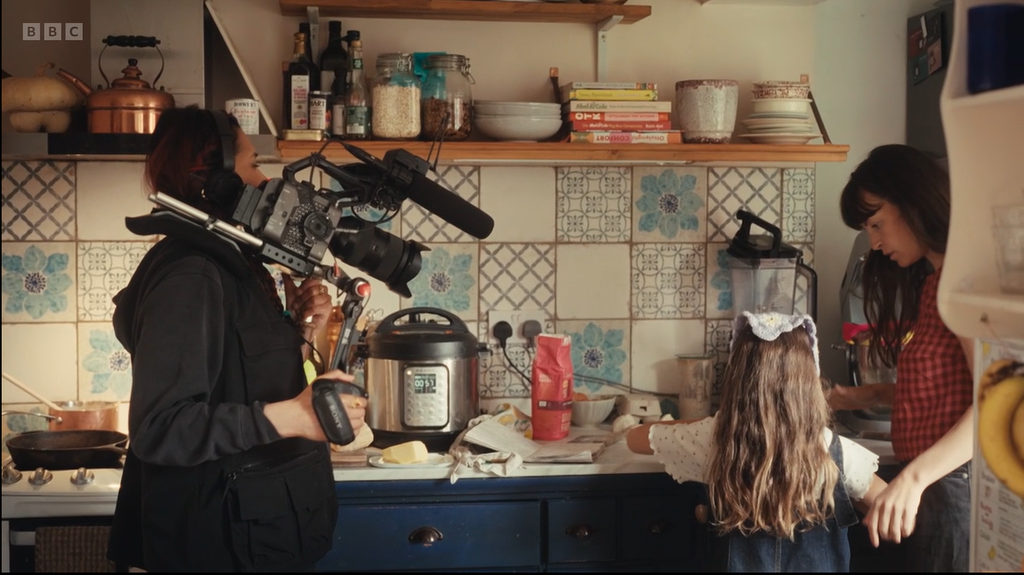
More importantly, Meghan wasn’t pretending that money magically appeared in the bank account while she spent her days lovingly preparing vegetables; she does two or three sponsored Instagram posts a month, and she admits her family needs that income. She’s working. She’s just found a way to do it around her children, from home, on her own terms. That’s not particularly traditional; that’s self-employment.
I actually found Meghan relatable. She seems to have found a way of living that suits her family, and she’s not pretending it’s something it isn’t. It did leave me wondering how many of the women watching tradwife influencers realise that the women they’re watching are often earning money themselves, but we’ll come back to that.
Laura: Religion, submission and a bit of ragebait

Next we meet Laura, a born-again Christian who creates TikTok content about being a traditional wife and teaches other women about biblical marriage. I think it’s fair to say that I didn’t particularly warm to Laura. OK, I found her deeply annoying. We would not be friends. She and her husband met through a Christian podcast, and their relationship progressed at a speed that would have had me running for the nearest exit waving red flags.
It won’t be a surprise that I think religion has an awful lot to answer for, particularly when it’s used to justify telling women what they can and cannot do. I really struggle with the idea that a woman should submit to her husband because God apparently thinks that’s how marriage should work. Blergh. If that’s how Laura and her husband want to organise their own relationship then it’s entirely up to them, but I have a problem with promoting it as something other women should aspire to.
Laura doesn’t have kids, and I did wonder whether her ideas about traditional domestic roles might change if she eventually experiences the relentless demands of looking after small children. It’s all very well discussing what a good wife should do in theory but another thing entirely when you’ve been awake since four in the morning with a vomiting toddler and you’re expected to greet your husband at the door with a sweet smile and a freshly prepared dinner.

I also suspect a lot of her content is designed to generate engagement. Ragebait is all the… rage. Controversy attracts attention, and attention can make money. That doesn’t mean Laura doesn’t genuinely believe what she says, but telling women they should submit to men is certainly one way to get people arguing in the comments. And if those arguments help you sell courses about being a better wife, all the better, presumably.
Molly: Seven children and a husband with a pube beard
Finally, there’s Molly, who lives with her husband Aaron and their SEVEN children. It is my strong belief that this is far too many children.
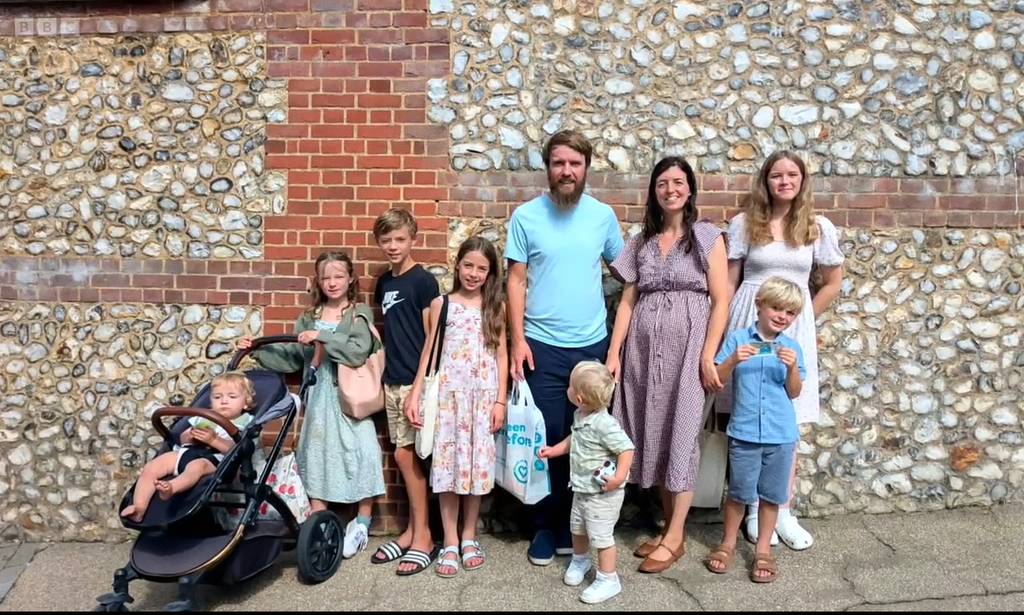
Molly homeschools them and apparently does four loads of washing every day, almost 30 loads a week, which would be enough to make me consider setting fire to the washing machine. She looks absolutely exhausted, which is hardly surprising when you consider that she’s responsible for educating seven children whilst cooking, cleaning and keeping the household running. And I’m not being unkind when I say that she looks like she barely has time to wash her hair, let alone spend an afternoon doing something entirely for herself.
Whatever else you think of her lifestyle, Molly certainly isn’t sitting around doing nothing and the reality looks considerably less glamorous than the beautifully curated tradwife videos. If this is supposed to be the relaxing alternative to having a job, I’m not entirely sold.
Molly and Aaron met at university, where she was training to become a journalist. She also says she didn’t originally want children, although she now considers them a blessing. Despite having had enough babies to permanently addle anyone’s brain, she’s articulate, intelligent and clearly capable of doing many different things.
Then there’s Aaron, who describes himself as a Christian nationalist, opposes abortion and LGBTQ rights, and believes that men should lead their households. He’s also a tedious prick whose arguments I found spectacularly unconvincing, which makes the whole idea of submitting to him even more baffling. His haircut looks like his mum still does it for him, and he has a collection of straggly pubes glued to his chin. I appreciate that his facial hair isn’t particularly relevant to his beliefs but it certainly didn’t improve my opinion of him.

I found myself feeling sorry for Molly, although she probably doesn’t want or need my sympathy. She says she’s happy, but it’s difficult watching a woman who once wanted to be a journalist apparently content to defer to a man whose beliefs and face I find so objectionable.
I suppose that’s the trouble with believing women should be free to choose their own lives: occasionally they’re going to choose something you think is absolutely bonkers.
I was a stay-at-home mum, but definitely not a tradwife
Watching Molly’s life unfold, I couldn’t help thinking about how different my own experience of staying at home with children had been.
I’m about as far removed from the tradwife stereotype as it’s possible to get. I’m divorced, I own my own house, I co-parent my children and I earn my own money. I have no desire to submit to a husband, or anyone else. But I did stay at home with my children when they were little, and it’s important to me that this isn’t seen as an attack on women who make that choice.
Ten years ago after my maternity leave ended, I wanted to return to work part-time but my employer wasn’t interested in flexibility. With two young children and childcare costs potentially exceeding £2,000 a month, it simply wasn’t worthwhile. I wrote about the whole thing at the time in The Working Mum Experience: Part 1 and Part 2. It’s like a portal into the past.
Ultimately we could afford for me to stay home, so that’s what I did. I enjoyed parts of it, but fuck me – babies are boring. There’s only so much rhyme time, soft play and daytime television a person can tolerate before their brain starts dribbling out of their ears, and I was delighted when my children were old enough to go to nursery.
I also found it surprisingly lonely, something I wrote about honestly at the time. I missed my colleagues, adult conversations and having something to think about that wasn’t somebody’s bowel movements. Blogging gave me an outlet, a community of other mothers and eventually an income. BabyCentre, (where I’d spent far too much time arguing about parenting with complete strangers) even started paying me for a weekly column. That gave me the confidence to think I might actually be able to make a living from writing, and ten years later I’m still doing it.
Which brings me back to Meghan, and the rather “amusing” contradiction at the heart of the tradwife influencer movement.
The tradwife business model

A study published in 2026 looked at 250 TikTok posts from prominent tradwife influencers and found that almost two thirds contained attempts at monetisation. So while these women are promoting a return to traditional domestic roles, they’re doing it alongside running businesses, attracting advertisers and making money. They’re doing exactly what modern working women do, but wearing prettier dresses.
I don’t begrudge them particularly. I’ve made a living through content creation myself, and I know how much work goes into it, but the message conflicts with the reality. The successful influencer has a business and potentially a significant independent income; the woman watching her videos and being sucked in might have none of those things. It’s a lie.
There’s another important point here: making money online is difficult. It would be easy for me to say ‘do it! Look what you can achieve!’ but I started blogging alongside hundreds of other parenting bloggers trying to turn our ramblings about nappies and sleepless nights into something resembling a business. Very few are still at it, and when I revisit my old posts I’m constantly finding links to blogs that no longer exist.
I’m still here, but that doesn’t mean anyone could have done it. I have a degree, a reasonable amount of intelligence, marketing experience and somehow, the ability to write something people might actually want to read. Add ADHD hyperfocus, years of learning about SEO, content creation and monetisation, plus an enormous amount of persistence and a bit of luck. I also had the financial circumstances to spend a long time working for practically nothing while I built something.
My own Instagram account is hardly setting the world alight, even when I remember to post something occasionally. The money comes primarily through websites I’ve spent years building. You can’t just open an Instagram account, photograph yourself kneading dough and expect thousands of strangers to become fascinated by your life. Nor can you ask ChatGPT to churn out a load of articles and expect people to read them.
The dangers of financial dependence
One of the most important parts of the documentary, which isn’t really explored as much as it should be, comes when Poppy speaks to an expert about coercion, domestic abuse and the difficulties women face when trying to leave relationships.

This is something I have professional experience of, having previously worked as a Community Safety Manager. Part of my role involved working with a domestic abuse charity that we funded to train professionals in other services. I do remember initially wondering why women didn’t simply leave abusive partners but that training completely changed my understanding of how difficult leaving can be, especially when someone is financially dependent on the person abusing them.
You can live in an enormous house, drive an expensive car and enjoy lovely holidays, but if you have no income of your own and your partner controls the money, you’re in a vulnerable position.
I’m not suggesting traditional marriages are inherently abusive, or that any of the women in this documentary are experiencing abuse. But circumstances change, and financial dependence can make those changes incredibly difficult to navigate. I’ve been divorced myself and while my marriage certainly wasn’t abusive in any way, having my own income meant I could make decisions about my future without worrying how I was going to afford to live.
I’m also boringly sensible about money and have paid into a pension since I started earning regularly. Stay-at-home parents can receive National Insurance credits towards their State Pension, but that doesn’t necessarily compensate for years without workplace pension contributions or an independent income. I don’t particularly fancy reaching retirement age and discovering that my entire financial plan consists of hoping somebody else will look after me.
Whatever arrangement you choose, I think it’s sensible to have a plan for what happens if your circumstances change, whether that’s because a relationship ends, your partner loses their job or you simply decide you want something different.
So is being a tradwife actually a feminist choice?
By the end of Young, British and Tradwife, Poppy and Molly have spent time experiencing each other’s lives, but the ending is a little underwhelming. Neither seems particularly keen to have an argument, so they essentially agree to disagree. After watching Poppy challenge Aaron, I admit I was hoping for a bit more confrontation but I suppose neither woman was going to change her entire outlook after spending a few days together.
I did, however, agree with the general conclusion that women should be free to make their own choices, even when those choices look completely incomprehensible to somebody else. Meghan seemed to have found a way of combining motherhood with paid work that suited her family, Laura was promoting religious ideas about marriage that I don’t agree with, and Molly was living a traditional family life that I personally couldn’t imagine finding fulfilling. But the fact that I wouldn’t want their lives doesn’t mean they shouldn’t be allowed to choose them.

I don’t think there’s anything wrong with being a stay-at-home mother. My own mother was one, I was one, and I know women who absolutely love raising their children full-time. Equally, I know women who love their careers and would lose their bloody minds if they had to spend every day entertaining a toddler. Neither is a failure, although whatever you choose, there’s bound to be somebody ready to tell you you’re screwing up your kids.
Where I take issue with the tradwife movement is the suggestion that women should surrender their independence because it’s supposedly the natural or God-given order of things, particularly when some of the people promoting that message are running successful businesses themselves. Boo hiss to that bollocks. It’s easy to romanticise a life spent raising children when you’re young, in love and everything is going well, but considerably harder to contemplate what happens twenty years later if you want to change direction and have no income, pension or recent employment experience.
Ultimately, I don’t think women should have to work, and I don’t think they should have to stay home either. That is the beauty of feminism: Choice. I think they should be able to make their own decisions, but understand the potential consequences and be able change their minds later if they want to. I’m glad I had the opportunity to stay home with my children when they were little, and I’m equally glad I had the opportunity to build a business and become financially independent.
These days, I’ll take my own income, my pension and the freedom to do exactly what I please over the tradwife dream. And if I want sourdough, I’ll buy it from Tesco.
If you enjoyed this and you’re feeling generous, you can buy me a cup of tea or a glass of wine – or donate to my houseplant addiction fund – here.
You can also see my Amazon wish list here.