
Home working was supposed to be temporary. Yet years on, millions of people still spend at least part of their week working from home, and most of them are doing it from spaces that were never designed for the job. The kitchen table. The corner of a bedroom. A landing with a laptop balanced on an ironing board.
It works, just about. But there is a growing recognition that where you work at home matters as much as the fact that you work at home. And for many, the answer sits at the bottom of the garden.
The Spare Room Was Only Ever a Stopgap
When home working arrived in a hurry, people made do. Dining chairs became office chairs. Wardrobes became video call backdrops. The problem is that making do has a cost, and it adds up over time.
Working in a shared living space means constant low-level friction. Your desk is also where the family eats. Your monitor stares at you during dinner. Every workday starts with setting up and ends with packing away, or worse, with work simply staying out permanently and the room losing its original purpose altogether.
There is also the noise. Deliveries, dishwashers, school runs and shared walls all chip away at concentration. Research on focus consistently shows that interruptions carry a heavy price, with some studies suggesting it takes over twenty minutes to fully recover from a single distraction.
Separation Is What Makes Home Working Work
The biggest weakness of working indoors is not the desk or the chair. It is the lack of a boundary.
When your office is inside your home, work and home blur into one another. It becomes harder to start the day with intent and harder still to finish it. Many home workers report answering emails late into the evening simply because the laptop is sitting there, visible, a few feet from the sofa.
A dedicated space outside the house restores the boundary that commuting used to provide. The walk down the garden is short, but it is enough. It tells your brain that work has started. And when you close the door at the end of the day, work stays behind it.
That separation cuts both ways. Meetings and calls no longer compete with household noise, and the household no longer has to tiptoe around your working day.
Built for Work Rather Than Borrowed From the House
The other advantage is simple. A purpose-built space is designed around the job, not squeezed around everything else.
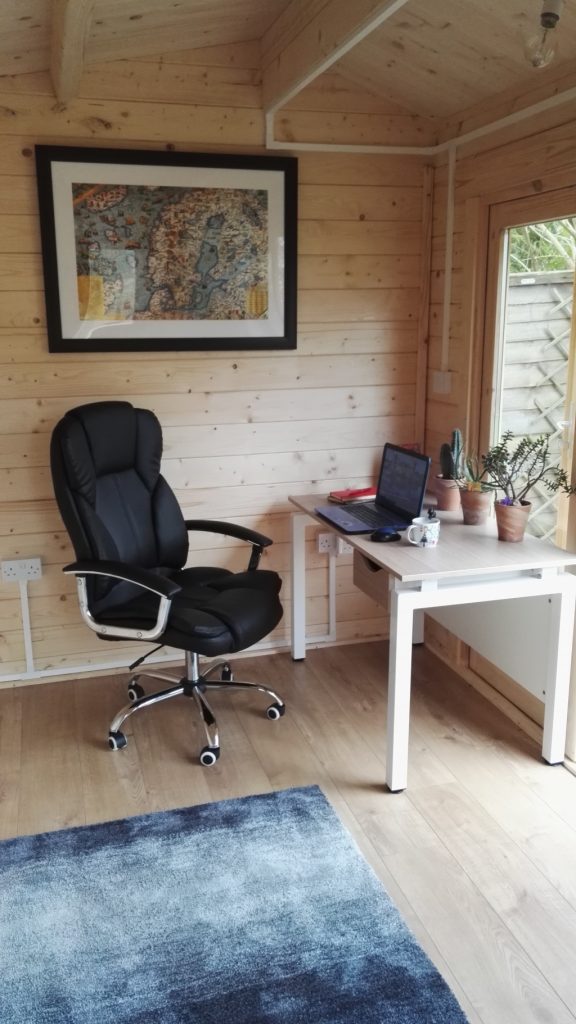
A well-built garden office typically includes things a converted bedroom never will. Proper insulation for year-round comfort. Dedicated power and lighting. A wired internet connection rather than a Wi-Fi signal that fades the further it travels from the router. Natural light positioned where you actually sit, rather than wherever the house happens to put it.
This is a big part of why demand has grown so quickly. A growing number of home workers across the county are choosing an essex garden office over a loft conversion or an extension, partly because the build is faster and less disruptive, and partly because the finished space is genuinely fit for purpose from day one.
There is a comfort factor too. Indoor workspaces inherit the temperature, light and layout of the room they borrow. A garden office is set up for eight hours of focused work, which makes a noticeable difference to energy levels by mid-afternoon.
A Better View Than a Wall
It sounds like a small thing, but it is not. Most makeshift home offices face a wall, a wardrobe or a window onto the street. A garden office faces the garden.
Time spent looking at greenery has a well-documented effect on mood and concentration. Working with a view of trees, plants and sky, even through glass, beats staring at magnolia paint for eight hours. Many people find their garden becomes something they actually notice and enjoy every day, rather than a space they only use in July.
The garden itself often gets more use as a result. Once there is a warm, connected building at the end of it, people are drawn outside far more often. It is one of the reasons essex garden rooms have moved from a lockdown trend to a permanent fixture, used as offices during the week and as extra living space at the weekend.
What It Means at the End of the Day
Perhaps the strongest argument is the simplest one. When the working day ends in a garden office, it actually ends.
You shut down the computer, close the door and walk back to the house. Thirty seconds of commute, and a clean break between work and everything else. The laptop is not on the kitchen counter. The unfinished spreadsheet is not glowing in the corner of the living room. Home feels like home again.
For anyone who has spent the last few years working from a corner of a room that was meant for something else, that alone can be worth the investment. The spare room gets to be a spare room. The dining table goes back to being a dining table. And work gets a space that finally takes it seriously.