
We got a letter today from the NHS about my son. He’d had his reception-year measurements taken and his height and weight were normal. Having looked it up on the BMI calculator on the NHS website, he’s actually on the bottom 10th centile but that’s OK and within a healthy range. Phew, eh?

Last year though, we got the same letter about my daughter, and it wasn’t OK.
My oldest, despite eating a better diet than her picky little brother (with vegetables and everything…) and doing dance lessons as well as swimming every week (and walking to and from school every day, being active at the weekends and generally being a healthy sort who has still not missed one single day off of school) was sitting on the 90th centile, which classed her as overweight.
It was like a punch to the stomach if I’m honest.
Your child is overweight.
I wondered if I was one of ‘those’ parents who couldn’t see that my child was suffering because I was a bad parent. I suspect every parent who received that letter thought the same and felt pretty bloody guilty (apart from ‘those’ parents, who probably don’t care).
My daughter has always been solidly built, just like her mum, but I never thought she was over the average or unhealthy. I wondered if perhaps I was blind to it. We have all seen parents uploading pictures of their kids to Facebook absolutely outraged that they’re being labelled fat, even though they clearly are a little chunky; was I in denial?
Trying to be rational about it, I asked some friends and her teacher for their honest opinion; did I need to change anything? Did I need to look at her diet?

Was it necessary to start making changes to what we ate?
This is something which I really didn’t want to do; limiting food would mean she’d lose weight for sure, but god knows what kind of mental health and body image issues that could cause later in life.
I never had a bad relationship with food. Fat didn’t even come into my vocabulary until I was in my teens and even then, I didn’t really worry about it. I don’t want her childhood to be any different.
The overwhelming message back was not to rush into anything, keep an eye on it, but not worry too much. She was and is an active and healthy girl.
Fortunately she was clearly in a pre-growth spurt chunk-out when the measurement was taken, as she then grew about 3 inches overnight and then hasn’t stopped, and is now perfectly healthy sitting on the 80th centile (a whole 10 centiles lower!), but all that begs the question…
Is weighing our children necessary?
As a former statistician, who used data sets just like this to inform policies and strategies, I completely understand the need to have a cohort measurement; to look at changes on a local and national scale over time. I didn’t and won’t opt out of the measurements for this reason, although I entirely understand the rationale of parents that do.
The nation is getting fatter at an alarming rate and we do need to keep an eye on this. Child obesity is a crisis that needs to be tackled. So, with that in mind, I do think it’s an important measurement to take.
However on an individual level, at best it’s not particularly useful and at worst it could be damaging; a child pushed onto a diet, a parent who is already struggling who is now made to feel like they are failing at something else.
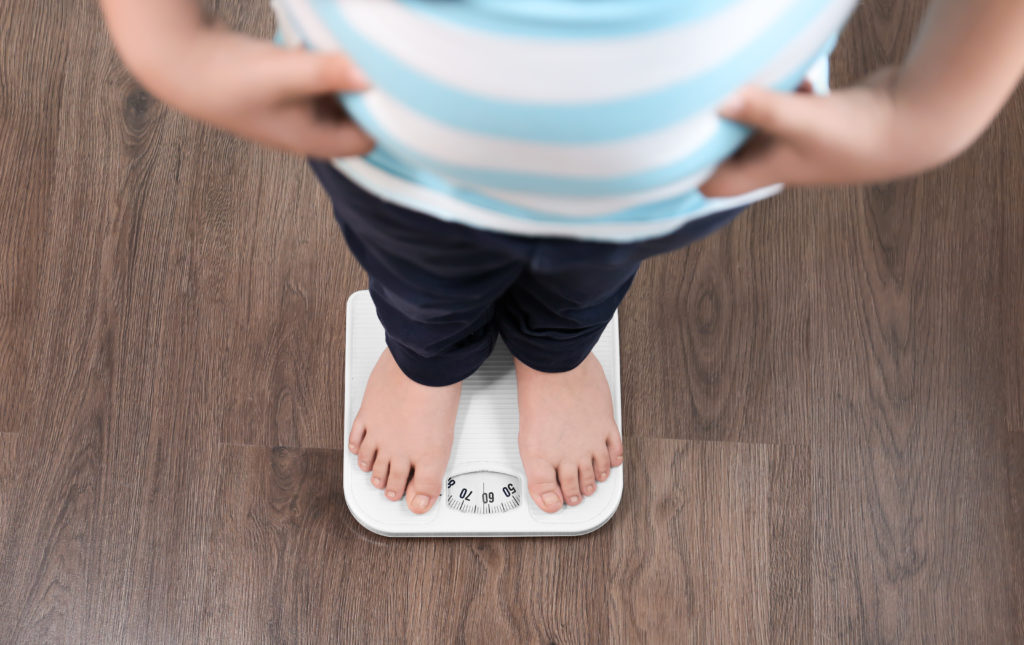
BMI for children is a much criticised measurement.
It is widely recognised as a poor indicator of overall health; one only needs to look at the 30+ BMI of an athlete to see that it falls down easily.
However I’m not pretending that my daughter is pure muscle, so even if BMI is as good an indicator as we can get, surely it doesn’t make sense that we are drawing a conclusion from one measurement, taken as a single snapshot in time.
Children are small, so even small fluctuations (a stomach bug the week before, or being in a pre-growth spurt phase, for example) or minor mismeasurements can lead to incorrect and basically useless results.
Yes, it’s important to keep an eye on our children.

Despite what a lot of people appear to believe, becoming a parent doesn’t mean you automatically know what is best for your child; I have children but I don’t have a medical degree and I am happy to take expert advice on things. Plus they are the only children I have, so I really have nothing to compare them to.
Surely a teacher who will have taught hundreds of children and know a child’s level of activity and probably quite a lot about their home life, or a medically trained family doctor are better placed to draw a judgement on whether intervention is required?
Which brings me on to the next point; intervention.
There wasn’t any, no follow up at all. Your child is porky, just thought you’d like to know, and then silence. Now it’s all well and good taking these measurements, posting them to parents and telling them to cut out sugar but that falls very short of the support that parents who actually need it will require.
Imagine if, faced with this data, schools were able to invest more into physical education and healthy eating. If teachers and school nurses (which probably don’t even exist any more) were able to signpost children and parents to funded activities which would help them become active and learn about healthy eating habits.
Some schools are better than others, but there is still plenty of work that could be done there; it’s all well and good entirely cutting out sugar at home, but when the school lunch menu is basically pasta and biscuits, parents’ hands are tied there.

So I guess what I’m saying is that I don’t have an answer.
There are, for sure, parents out there who could do with a bit of a reality check where there kids are concerned, but I don’t feel like this is going to provide that.
Personally, I would be far more supportive of some kind of ongoing monitoring (rather than one measurement in reception, and one in year six which is the current system) which would give a more complete picture.
Alternatively, simply making it easier for professionals to highlight where there are issues with health and weight and where intervention might be required, and putting actual support in place for those parents that need it would seem to me like a better approach to actually tackling the issue.
I agree with you as someone who completed a bachelor of science and did plenty of stats that this information is extremely helpful on a National level. Though, they really need to work with psychologists & nutritionists on making a follow up plan so when an individual sets off yellow flag that there is plan for parents to use. That could be even just a reference to follow up with your own doctor for more information, as you said it could be a situational circumstance (was sick or just got back from a holiday abroad). Just sending a point blank letter will not lead people to work on the next steps by themselves if there needs to be.
It’s a serious social issue that needs a more in depth process from the folks who make up those letters. Glad you were able to critically think about it as a whole and share your experience!
I don’t think the modern use of BMI for adults or children is really helpful, as the previous reply said. Before BMI we used thickness of fat covering in eight sites using ultrasound to measure the subcutaneous adipose tissue. BMI is possibly useful for large scale stats because it is easy and cheap to carry out but no use for the individual adult or child. Cheapness is no excuse for it to be used to advise the patient or parent.
Fran, neither of your children or yourself are overweight as anyone can see from your photos. You don’t need BMI calculation nor ultrasound to confirm that.