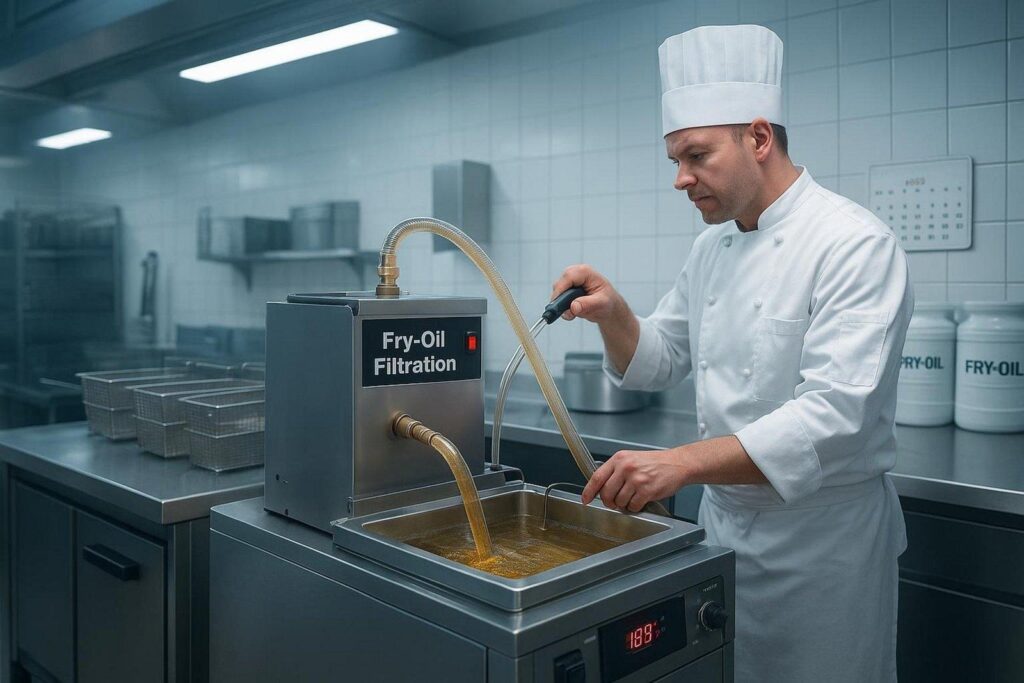
In busy restaurant kitchens, every dollar matters. Frying oil is one budget line many people miss. So, how do fry-oil conditioners and filters cut costs? They help oil last longer, raise food quality, improve safety, and make daily work smoother. By adding these tools, restaurants can turn a steady drain on cash into a managed system that supports profit.
The price of fryer oil keeps rising. Dirty oil breaks down fast, smells bad, and hurts food quality. It also forces frequent changes, which quickly drives up spend. With the right use of fry-oil conditioners & filters, kitchens can tackle these issues early, lowering oil, labor, and maintenance costs while keeping food consistent and helping equipment last longer. This move pays off both now and over time.
What Are Fry-Oil Conditioners and Filters?
Fry-oil conditioners and filters are tools that keep cooking oil in good shape and stretch how long you can use it in commercial fryers. Together they slow the natural breakdown caused by heat, crumbs, and air.
Without these systems, oil darkens, smokes, and gives food off flavors. Crumbs, batter, and other bits burn in the oil and speed up breakdown. Conditioners and filters remove these bits and the byproducts that would push you to throw oil out too soon.
Key Functions of Fry-Oil Conditioners
Conditioners do more than catch particles; they also target the chemical changes in oil. Many use filter aids like magnesium silicate that bind with free fatty acids and polar compounds. These cause rancid smells and faster breakdown.
Used in a regular routine, conditioners help refresh oil. They bring back clearer color and better clarity, so the oil looks and cooks more like new. Paired with physical filtration, they can add about 25-30% more usable time, helping you use every drop.
Types of Fry-Oil Filters Used in Commercial Kitchens
Fry-oil filtration comes in several forms to fit different kitchen sizes and needs. Most setups fall into two groups: physical filtration and chemical filtration. Many kitchens get the best results by using both.
- Physical filtration
- Manual filtering: pour oil through a fine screen, cone filter, or filter paper. Low cost and simple, good for small sites or low volume, but time-consuming and less effective on very fine particles.
- Mechanical pump systems: portable or built-in. A pump pulls oil through fine media and returns it to the fryer, capturing particles down to around 5 microns. Faster, consistent, and safer with less handling of hot oil.
- Centrifugal filtration: spins oil to separate solids. Very effective for fine particles and reduces filter waste. Higher upfront price, well suited to large or quick-service operations.
- Chemical filtration
- Filter aids/conditioners: powders such as magnesium silicate added during filtering to grab harmful compounds and improve clarity.
How Do Fry-Oil Conditioners and Filters Reduce Restaurant Costs?
The clearest gain from using fry-oil conditioners and filters shows up in the budget. Fryer oil is a big and rising cost. By keeping oil quality high, kitchens can cut this spend and turn a major overhead into a smaller one — something solutions like Save Fry-Oil are designed to support.
These savings are real. You buy oil less often and throw away less. You also pay less for hauling used oil. This smart spend helps owners handle financial pressures and move funds to other parts of the business.
Extending Cooking Oil Life
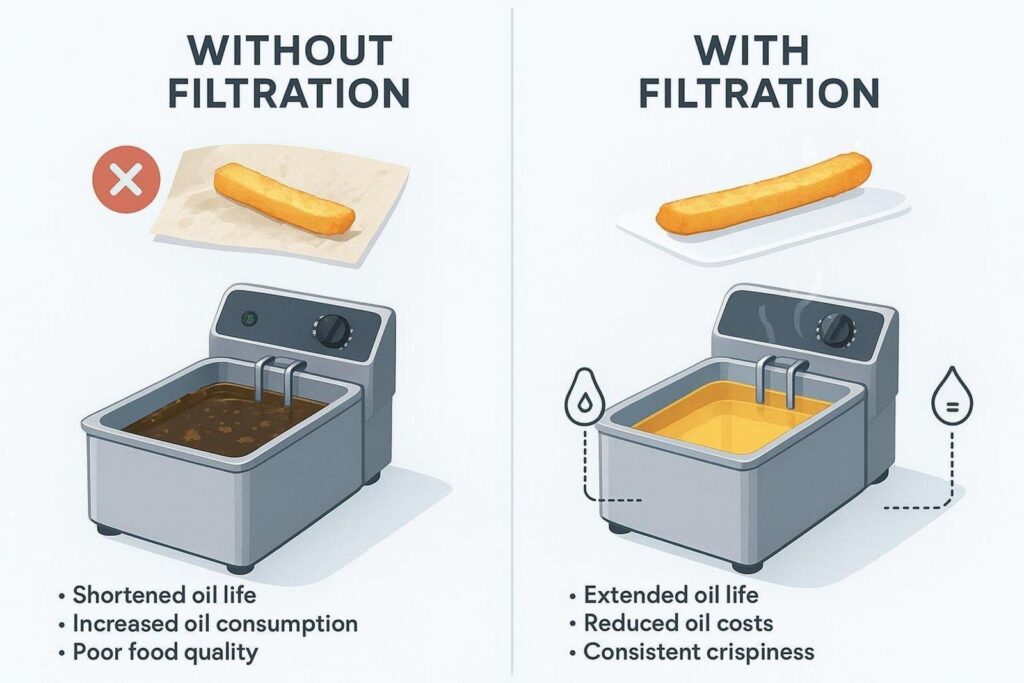
One big reason to invest in these tools is how well they stretch oil life. Heat, air, and food bits age oil. That shortens life and means more costly changes. Regular filtering and conditioning fight these factors.
By removing burnt crumbs, carbon, and fine particles that speed up aging, these systems keep oil cleaner for longer. With good temperature control, filtration can even double oil life, often cutting oil cost in half. That means fewer purchases and yearly savings of hundreds or even thousands of dollars per fryer.
Reducing Oil Replacement Frequency
When oil lasts longer, you change it less often. Without good filtration, some sites swap oil every few days. That means constant buying. A 5-gallon jug can cost $40-$60, and one fryer might use 10-20 jugs a month.
With steady filtration, oil can run for days or even weeks more. That means fewer orders, fewer deliveries, and less time tracking stock. A restaurant using 40 gallons a week could save $2,000-$3,000 per year by filtering on schedule. Savings come from the oil itself and from lower labor and logistics work.
Lowering Waste Disposal Expenses
Used oil also costs money to remove. More changes mean more pickups and higher fees.
By stretching oil life, you produce less waste oil. That cuts pickup frequency and disposal bills. Cleaner used oil is also worth more for recycling into biodiesel or sustainable aviation fuel, which can bring rebates. You spend less and reduce your environmental impact, which many guests appreciate.
Minimizing Equipment Maintenance and Repair Costs
Clean oil helps the fryer too. Dirty oil filled with food bits and chemical byproducts leads to carbon buildup, clogged filters, and extra wear.
Fryers that run on cleaner oil work better, last longer, and need fewer fixes. Taking care of oil helps prevent damage to this core piece of cooking gear. Investing in a quality filtration setup saves on service calls and keeps fryers in good shape for longer, which boosts kitchen output.
Labor and Safety Advantages of Using Oil Conditioners and Filters
Oil savings matter, but these tools also help with labor and safety. These areas are important for profit and for staff health.
Manual oil work takes time and carries risk. By automating and simplifying oil care, kitchens lower accident risk and free staff to focus on cooking and service. The result is smoother shifts and a safer workplace.
Cutting Down on Staff Time for Oil Changes
Manual oil changes drain time. Staff must drain hot oil, clean the fryer, and refill it. This interrupts kitchen flow and pulls people away from prep and guests.
Modern systems, especially automated ones, cut this time sharply. Some units filter with one button in a few minutes while other fryers keep running. Less time on oil changes means more time on core tasks, better productivity, and less overtime.
Simplifying Compliance with Health Standards
High hygiene and food safety standards are a must. Inspectors check oil quality, and old, broken-down oil can lead to violations. Tools like TPM (Total Polar Material) test strips or electronic testers help track oil quality.
With steady filtering and conditioning, it is easy to keep oil within acceptable ranges and avoid problems. You reduce the chance of fines and damage to your reputation, and the food tastes better without off-flavors from spent oil.
Improved Worker Safety and Burn Prevention
Handling hot oil is risky. Manual changes raise the chance of burns and spills, which can lead to injuries, missed work, and liability.
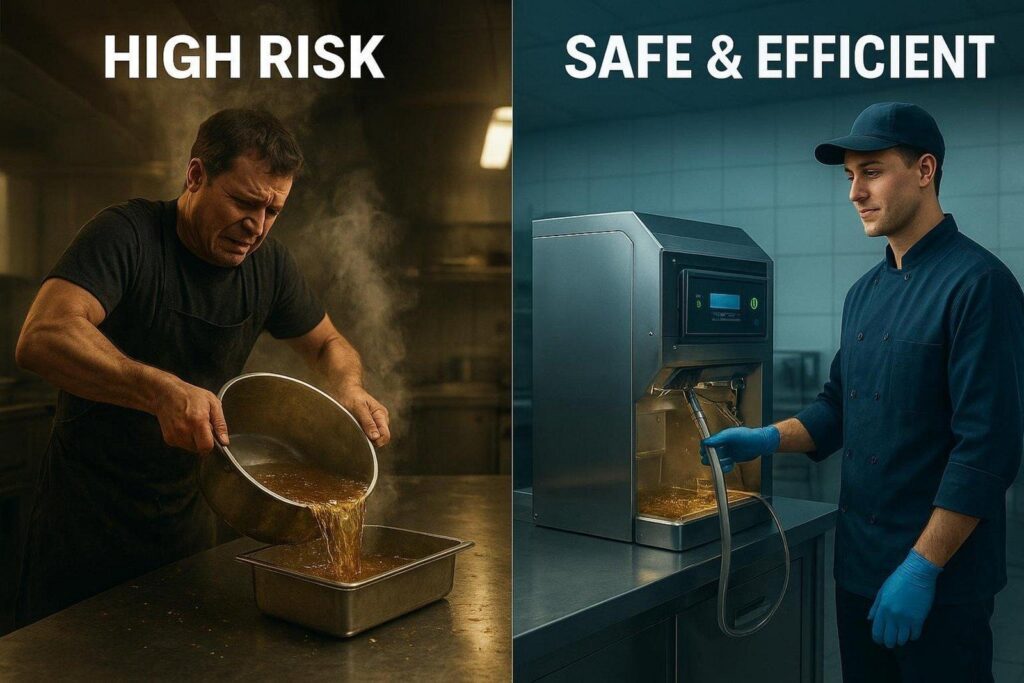
Filtering machines limit direct contact with hot oil and cut spill risk. Automated steps also cut human error. Fewer accidents mean lower insurance costs and a more confident team. This safety focus reduces disruptions and keeps service on track.
Best Practices for Getting the Most from Fry-Oil Filtration in Restaurants
Owning fry-oil conditioners and filters is only the first step. To get full value, you need a clear plan and steady habits. Like any advanced tool, these systems work best when used the right way and built into daily routines. The goal is a culture of active oil care.
Set a regular schedule, pick gear that fits your kitchen, and train staff well. Each piece matters. Done right, filtration moves from a chore to a core part of kitchen work that saves money and holds quality steady.
How Often Should Oil Be Filtered?
How often you filter has a big impact on oil life and food results. There is no single rule for every kitchen, but most places should filter daily, often after heavy service. High-volume sites may need to filter between batches or more than once a day.
Skipping even one day lets debris build up and speeds breakdown. Skim floating bits between batches too. A few minutes of daily filtering can add days or weeks to oil life and delay the next full change.
Choosing the Right Equipment for Your Kitchen Size
The right setup depends on your volume and layout. A small café with one fryer has different needs than a busy quick-service line with many fryers.
For small sites, manual filtering may be enough and keeps costs low. For most commercial kitchens, mechanical pump systems-portable or built-in-are the better pick for speed, consistency, and safety. Large or very high-volume sites may add centrifugal units for finer removal. Brands like Pitco and Henny Penny offer many options, including low oil volume fryers that cut oil use; for example, the F5 uses about 40% less oil. Review your output and budget to choose the best fit.
Training Staff on Oil Management Procedures
Even the best system only works if staff use it the right way. Training is key for steady, safe oil care. That includes how to run the filter gear and broader habits for oil handling.
Cover how often to filter, safe handling of hot oil, why skimming matters, how to read test strips, and how to store oil in sealed containers away from heat and light. Explain the reasons behind each step-clean oil means better food, a safer line, and real cost savings. Simple, automated steps also shorten training and reduce slowdowns during service.
Calculating ROI and Long-Term Savings from Investing in Oil Conditioning Technology
Any purchase should make financial sense. While fry-oil systems add upfront cost, the payback is often fast. Think beyond the first bill and look at gains over time.
The big wins show up over months and years. These tools cut expenses, raise profit, and support the long-term health of the business. For many kitchens, this is a sound move.
Upfront Costs vs Ongoing Savings
The price of a quality filter system varies by type and features. For a small restaurant, the upfront spend can feel high. See it as an investment in speed, safety, and lower costs. The savings start to offset the purchase quickly.
Add up the effects: fewer oil buys, lower disposal fees, less labor on manual changes, and fewer fryer repairs. Many owners find oil savings alone can cover the cost, with some systems paying for themselves in 6-12 months. After you break even, the system keeps saving for years and lifts profit margins.
| Cost area | What changes with filtration | Example impact |
| Cooking oil purchases | Longer oil life, fewer full changes | Often 25-50% reduction |
| Waste oil disposal | Less used oil, fewer pickups | Lower fees; possible rebates |
| Labor | Less time on manual oil work | Fewer hours and overtime |
| Equipment service | Cleaner operation, less wear | Fewer repairs and longer life |
Case Studies: Typical Cost Reductions for Restaurants
Real examples show the value. A site using 40 gallons of oil each week can save $2,000-$3,000 per year with steady filtration. Reports also show that filter aids like MirOil’s Fry Powder can cut monthly oil spend by up to 50%.
Low oil volume fryers, like Henny Penny’s F5 that uses about 40% less oil, can save an average operation about $5,000 per year on oil. For a business with a 5% profit margin, a $5,000 saving equals the profit from $100,000 in extra sales-without extra labor. These numbers show that better oil management is a smart financial choice with steady returns for years to come.