
Every year, the same thing happens. April arrives, the sun makes a brief and optimistic appearance, and suddenly everyone is out in their garden like they’ve never seen outdoor furniture before. Cushions come out of storage. Someone mentions a BBQ. There’s talk of eating outside more often.
Then it’s July and it’s raining and the garden furniture hasn’t moved since that one good weekend in May.
British gardens have an image problem. We treat them as seasonal spaces, somewhere to be during those six or seven weeks when the weather behaves itself, and largely ignored for the other ten months. Which is a shame, because a garden that only works in summer isn’t really working at all.
The good news is that this is fixable. And it doesn’t always require ripping everything out and starting from scratch.
The Real Problem With Most Gardens
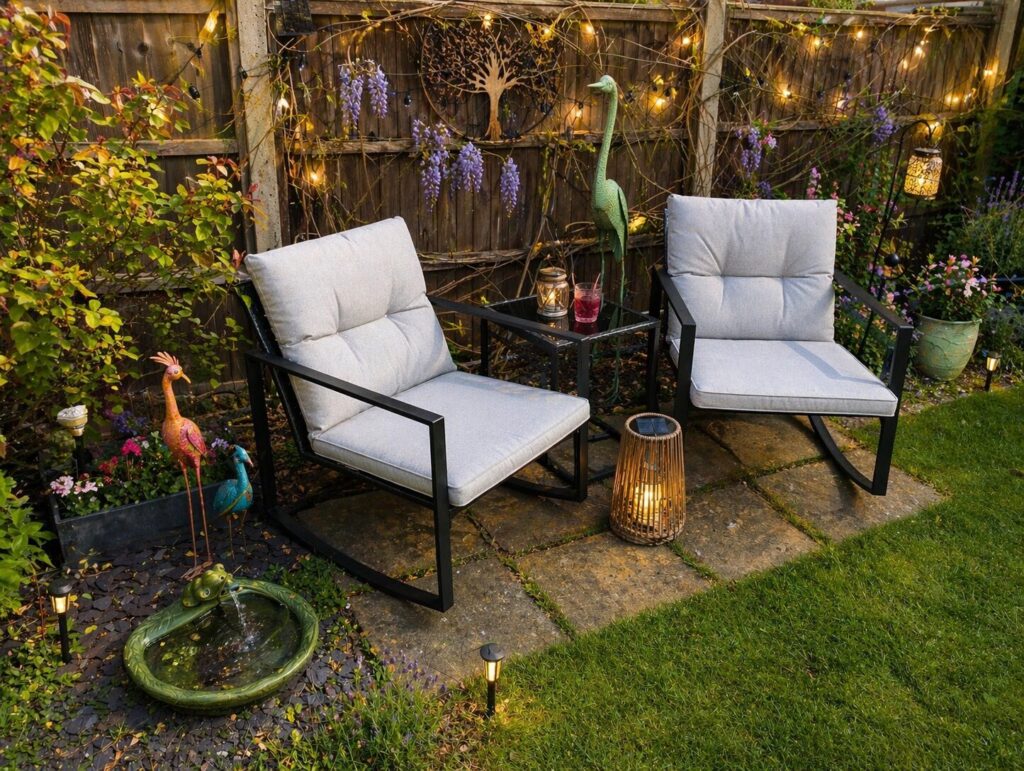
It’s not the plants. It’s not even the weather, though obviously the weather doesn’t help.
The problem is that most gardens aren’t set up to be used. There’s nowhere to sit that isn’t soaking wet after a shower. There’s nowhere to go if it gets a bit chilly. There’s no shelter from the wind that comes out of nowhere the moment you commit to sitting outside with a drink.
A garden that’s genuinely usable across different seasons needs some structural thought. Not necessarily expensive structural thought, but something more than just buying a nicer set of chairs.
If you’ve been looking at ways of creating more usable garden space, a properly designed garden room or outdoor structure is often what makes the difference between a space that sits empty nine months of the year and one that you actually spend time in. It gives you somewhere weatherproof to retreat to when the temperature drops, without having to go back inside the house.
What “Year-Round Garden” Actually Means
It doesn’t mean sitting outside in January pretending you’re fine. You are not fine. Nobody is fine.
What it does mean is extending the usable season. Pushing October into November. Making March feel viable. Getting the most out of those unpredictable shoulder months when it’s not cold enough to give up on the garden entirely but not quite warm enough to be comfortable without some shelter.
A few things make the biggest difference here.
Shelter is first. Even a simple pergola with a solid roof changes the experience dramatically. Rain stops at the end of the evening. You can sit out while it’s showering without getting soaked, which in the UK is a fairly non-trivial thing to be able to do. According to the Met Office, the UK sees an average of 133 days of rain per year. That’s a lot of evenings lost to the idea that sitting outside is out of the question.
Heat is second. A decent outdoor heater extends your comfortable window by several weeks at either end of the year. Gas heaters are effective but you’re constantly swapping canisters. Electric infrared heaters are better for fixed positions; they warm people rather than the air, which makes them far more efficient outdoors where the air doesn’t stay warm for long.
Lighting is third, and often underrated. When it gets dark at four in the afternoon from October onwards, a garden without lighting effectively shuts down for the day. String lights, wall-mounted fittings, solar path lights. None of it needs to be complicated. But without it, you lose the garden as a usable space for roughly half the day in winter.
The Case for a Garden Room
There’s a version of this that involves a proper structure: a garden room, a garden office, an outdoor room with insulation and power.
These have become significantly more popular over the last few years, partly because of how many people now work from home at least some of the time. A garden office is a different category of space from a shed. It’s weatherproof, temperature-controlled, and separate from the house, which matters more than people expect until they’ve tried working from a kitchen table with children, a dog, and a washing machine all competing for their attention.
But garden rooms aren’t only useful as offices. A room at the bottom of the garden with heating, lighting, and perhaps some kind of outdoor bar setup becomes a space for all sorts of things. A quiet place to read without being interrupted. Somewhere for teenagers to disappear that isn’t their bedroom. A space to have people round without the whole evening migrating indoors the moment someone feels a bit cold.
The cost varies significantly depending on size and specification. A basic insulated garden room from a reputable supplier starts at around £10,000 to £15,000 installed. Larger, more finished spaces with electrics, heating, and proper joinery can run to £30,000 or more. That’s not nothing. But for a lot of households it represents a meaningful addition to the property value as well as a usable space, and the Royal Institution of Chartered Surveyors has noted that well-built garden buildings can add measurably to a home’s market value when the specification is right.
Smaller Changes That Still Help
A full garden room isn’t the only option, and it’s not always the right one.
Some gardens are simply too small for a separate structure. Some budgets don’t stretch that far. Neither of those things means the garden can’t be made more usable.
A covered seating area, even just a decent pergola with a proper roof rather than open slats, changes the experience considerably. Add side panels for wind protection and you’ve got a space that works in most weather short of an actual gale.
A wood-burning fire pit or chiminea adds warmth and atmosphere for a fraction of the cost of a heater. There’s something about sitting around a fire that makes being outside in the cold feel intentional rather than just cold. People who would never sit outside in October will sit outside in October if there’s a fire involved.
Better surfaces help too. A garden that’s mostly lawn becomes muddy and uninviting from September onwards. A paved or decked area near the house stays clean and dry underfoot, which sounds basic but genuinely affects how often you go outside. If getting to your seating area means crossing wet grass and arriving with muddy shoes, you probably won’t bother.
Making the Layout Work
This is where a lot of gardens fall down even after people have invested in furniture and shelter.
The seating is in the wrong place. It gets afternoon shade but no evening sun. It’s not sheltered from the prevailing wind, which in most of England comes from the southwest. The practical route from the house to the sitting area is awkward, so people default to the patio directly outside the back door rather than walking down the garden.
Think about the path the sun takes across your garden through the day. Where does it sit in the late afternoon? That’s almost always the best spot for your main seating area, because that’s when you’re most likely to actually use it. South-facing gardens are the obvious winners here, but even north-facing gardens have spots that catch more light than others.
Think about the route from the kitchen to the garden. If you’re carrying drinks or plates and the route is fiddly, you’ll stop making the journey. This sounds trivial. It’s not. Gardens that are easy to access from the kitchen get used more. Full stop.
Getting More From What You Already Have
Not every garden needs a complete rethink or a significant budget.
Sometimes it’s as simple as moving the furniture. A lot of people put garden seating where it looks right from the house rather than where it actually gets the most sun or the most shelter. Walk around your garden at different times of day. Find where the warmth sits longest. That’s probably where the chairs should be.
Add a rug under the seating area. It sounds like a small thing but it changes how the space feels immediately. It defines the area and makes it feel like somewhere you’ve chosen to be rather than just a patch of paving with chairs on it.
Get the lighting right before summer ends and you’ll actually use it in the evenings. Solar lights have improved enormously in the last few years. You don’t need wiring, you don’t need an electrician, and you can put them anywhere.
The British garden doesn’t have to be a summer-only proposition. It just needs a bit more thought than we usually give it.