I’ve noticed something rather curious over the years. The same people who can talk your ear off about tannins, terroir, and whether a Bordeaux has “good legs” are increasingly the same people getting genuinely excited about a nice cup of tea.
And I don’t mean a teabag dunked in a mug while you scroll through your phone. I mean proper tea. The kind that comes with loose leaves, quiet rituals, and a whole new vocabulary to learn.
At first glance, it seems like a strange crossover. One is alcoholic, one is not. One is associated with late nights and celebrations, the other with quiet mornings and contemplation. But dig a little deeper, you’ll find they have many similarities.
Here’s why so many wine lovers find themselves falling down the tea rabbit hole.
The Trained Palate
If you’ve spent any time training your palate to pick out the blackcurrant in a Cabernet or the citrus notes in a Sauvignon Blanc, you’ve already done most of the hard work for tea tasting. A sensitive palate is a sensitive palate, whether you’re pointing it at a glass or a cup.
Tea, it turns out, has an incredibly diverse sensory profile. Some teas are floral and light, others are smoky, earthy, roasted, grassy, sweet, or almost creamy. The same skills you’ve already developed with wine — paying attention to aroma, mouthfeel, balance, and finish — translate surprisingly well.
Once you’ve learned to slow down and notice what is happening in a glass of wine, it becomes much easier to notice what is happening in a cup of tea. It is like learning one language and realising you can suddenly understand a related one.

Terroir: The Great Connector
Here’s a word wine lovers know well: terroir. That beautiful French concept that climate, soil, and terrain all leave their fingerprint on what ends up in your glass.
Well, tea has terroir too. The same tea variety grown in different regions can taste wildly different, just as grapes do. A tea grown high in the mountains may feel completely different from one grown in a warmer, lower region. Soil, rainfall, altitude, season, and processing all affect the final cup.
Pu-erh tea, for example, can be aged for years, sometimes even decades. Certain oolongs are closely associated with the rocky landscapes where they are grown. Green teas, black teas, white teas, and roasted teas all carry a sense of place, even before you start thinking about how they were picked and processed.
For anyone who loves the story behind a drink — the place, the people, the conditions that made it what it is — tea offers exactly the same kind of richness. Each cup carries a bit of the earth with it, just like a good bottle of wine.
The Ritual of It All
Wine drinkers know there’s a ceremony to the whole affair. The right glass, the right temperature, the pouring, the swirling, the sniffing. It’s not just fussiness. It’s about giving the drink a proper chance to show itself.
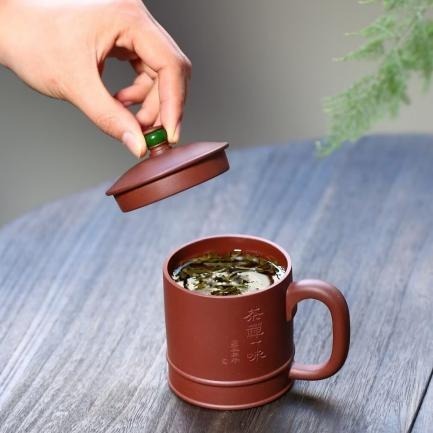
Tea is much the same. You warm the cup. (before brewing, pour boiling water into a purple clay teacup to warm it, this is to awaken the tea aroma). You measure the leaves. You watch them open. You notice the colour, the aroma, the first sip, the lingering taste after you swallow.

A Gentler Shift: From Wine to Tea
For many wine lovers, picking up tea does not have to mean saying goodbye to wine forever. It is more about adding a gentler option to the daily routine.
That evening glass of wine may have once signalled relaxation, reward, and the end of another long day. But a thoughtfully brewed cup of tea can offer a similar comfort, without the foggy feeling that can sometimes follow alcohol.
Swapping wine for tea is not about making life dull. It is a more nuanced transition, from passionate to soothing. You still have your own little ritual. Only now, it feels fresher, more focused, and easier to repeat every day.
For anyone looking to cut back on alcohol, sleep better, or simply feel a bit more at ease in their own body, tea provides a natural bridge. It gives you something to look forward to without making you feel as though you are giving something up.
And when you sip that tea slowly from a warm, smooth Yixing purple clay tea cup, the shift does not feel forced at all. It feels like taking the slow rhythm you loved in wine and turning it into a healthier, more sustainable everyday habit.
The Vessel Matters
Wine drinkers are famously particular about glassware. The shape of the bowl, the thickness of the rim, and even the weight of the glass can change the whole experience. A Burgundy glass is different from a Bordeaux glass for a reason.
Tea drinkers can be just as particular. And for good reason. The vessel you drink from does not just hold the tea. It shapes how you experience it.
A small tea cup makes you sip more slowly. A thin porcelain cup can make a light tea feel bright and delicate. A substantial clay tea cup can make the whole moment feel warmer, quieter, and more grounded.
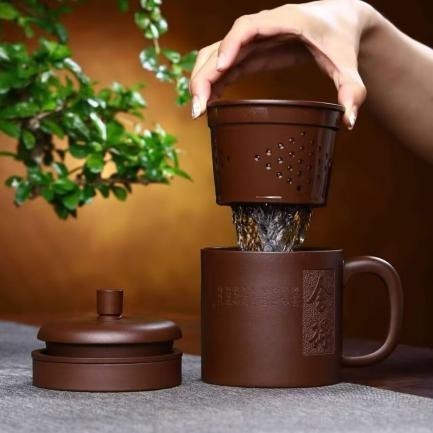
This is where Yixing purple clay becomes especially interesting. Yixing clay tea cups have long been appreciated in Chinese tea culture for their natural, unglazed texture and understated beauty. They do not feel shiny or showy. They feel calm in the hand, with a warm earthiness that suits the slower pace of tea drinking.
Many tea drinkers enjoy using Yixing cups because they make the act of drinking tea feel more intentional. The cup is not just decoration; it becomes part of the ritual. Over time, an unglazed clay cup may also develop a gentle character of its own, especially when used regularly with similar types of tea.
For a wine lover who already understands why the right glass matters, this kind of detail is very easy to appreciate. It is the same instinct: if you are going to drink something with care, the vessel should feel worthy of the drink.
The Bottom Line
Wine and tea are not really competing. They are complementary. One may belong to celebration, the other to contemplation. One may suit a dinner table, the other a quiet afternoon. But both reward the same qualities: curiosity, patience, and a willingness to pay attention.
If you already love wine, you are already most of the way to loving tea. You understand aroma, texture, balance, finish, and the pleasure of a drink with a story behind it.
You may just need the right cup to help you notice it.
Because honestly, if you are going to be fussy about what you drink – and let’s face it, you probably are – the cup can become part of the pleasure too.