
Arts and crafts are often seen as simple, fun activities to keep children busy. But behind the glue sticks, paint splatters, and colorful paper lies something much more powerful. Creative activities play a vital role in a child’s overall development—academically, emotionally, and socially.
From toddlers scribbling with crayons to older children building detailed projects, arts and crafts help shape how kids think, feel, and express themselves. Here’s why these creative moments matter more than we sometimes realize.
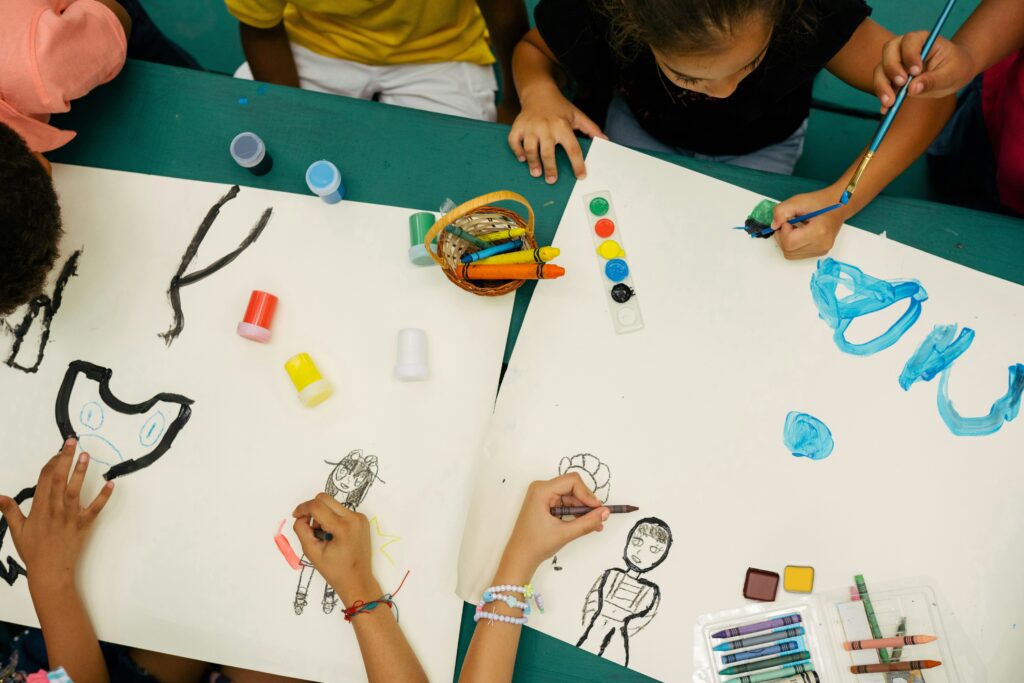
Boosts Creativity and Imagination
According to this pre-prep school in Surrey, arts and crafts give children the freedom to explore ideas without rules or right answers. A cardboard box can become a spaceship, a castle, or a race car—whatever their imagination decides.
This creative freedom:
- Encourages original thinking
- Builds confidence in self-expression
- Helps children see problems from multiple perspectives
Creativity developed through art often carries over into problem-solving and innovative thinking later in life.
Supports Fine Motor Skill Development
Cutting with scissors, threading beads, drawing shapes, and molding clay all require precise hand movements. These small actions strengthen fine motor skills and hand–eye coordination.
Strong fine motor skills are essential for:
- Writing and drawing
- Using tools and technology
- Performing daily tasks independently
Arts and crafts offer a fun, low-pressure way for children to develop these skills naturally.
Enhances Cognitive and Problem-Solving Skills
Creative projects often involve planning and decision-making. Children think about what materials to use, how to assemble parts, and how to fix mistakes.
Through this process, they learn to:
- Follow steps and instructions
- Experiment with cause and effect
- Solve problems independently
Trial and error becomes part of learning, teaching children that mistakes are not failures—they’re opportunities to improve.
Encourages Emotional Expression
Not all children can easily put their feelings into words. Arts and crafts provide a safe and natural outlet for emotions.
Through colors, shapes, and images, children can express:
- Happiness and excitement
- Frustration or worry
- Thoughts they may struggle to verbalize
This emotional expression supports mental well-being and helps children develop emotional awareness and regulation.
Builds Confidence and Self-Esteem
Completing an art project gives children a sense of accomplishment. There’s pride in creating something from start to finish—especially when adults recognize their effort.
Displaying artwork or simply praising creativity:
- Reinforces self-worth
- Encourages independence
- Motivates children to try new challenges
When children feel proud of what they create, they gain confidence in their abilities beyond the art table.
Improves Social Skills
Group craft activities encourage sharing, cooperation, and communication. Whether it’s passing supplies, working on a joint project, or discussing ideas, children learn how to interact positively with others.
Arts and crafts help children practice:
- Taking turns
- Respecting different ideas
- Collaborating toward a shared goal
These social skills are essential for school, friendships, and teamwork later in life.
Supports Academic Learning in Disguise
Creative activities often sneak learning into play. Counting beads, recognizing colors and shapes, experimenting with textures, or following instructions all support early academic skills.
Arts and crafts can reinforce:
- Math concepts
- Language development
- Early science exploration
When learning is fun and hands-on, children are more engaged and likely to remember what they’ve learned.
Arts and crafts are much more than a way to pass the time—they are a foundation for learning, growth, and emotional well-being. By giving children regular opportunities to create, we support their imagination, confidence, and essential life skills.
The best part? You don’t need expensive supplies or perfect results. A little space, a few simple materials, and the freedom to explore are all children need to create something meaningful—and grow in the process.