There is something quite funny about the way a home changes once real life starts happening in it. You may begin with a clear idea of how you want every room to look, carefully choosing colours, furniture and accessories, only to discover a few years later that the sofa has become a playground, the dining table doubles as a homework station and there is permanently something living under the stairs that you don’t remember buying.
That doesn’t mean the home has gone wrong. In many ways, it means it has become a proper home.
Family life brings a certain amount of chaos, and trying to keep everything looking like a showroom is usually an exhausting exercise. Instead, it makes more sense to create a space that feels comfortable, personal and practical while still leaving room for the things that make it beautiful.
The good news is that this doesn’t necessarily require a major renovation or a completely new interior. A few thoughtful changes, from better lighting to more personal accessories, can make an ordinary room feel considerably more inviting.
Start With the Way You Actually Use Your Home
One of the easiest ways to improve a home is to stop decorating for an imaginary version of your life and pay attention to what really happens there. If the family always gathers around the kitchen island, that space deserves more attention than the formal dining room that is used twice a year. If everyone takes their shoes off in the hallway, some practical storage near the door is probably more useful than another decorative table.
This approach is particularly helpful in a busy family home because appearance and practicality don’t have to compete with each other. A well-placed basket can hide everyday clutter, while a comfortable chair can provide somewhere to read, work or simply escape for ten minutes.
The aim isn’t to remove every sign of family life. A home that is too carefully protected can end up feeling strangely impersonal. Instead, think about what causes the most frustration on a daily basis and make small changes that solve those problems while still fitting the overall style of the room.
Good Lighting Can Change the Atmosphere of a Room
Lighting is often left until the end of a decorating project, even though it can have a huge effect on how a room feels. A space with only one bright ceiling light can seem harsh and functional, whereas several different sources of softer light can make the same room feel warmer and much more relaxing.
Try adding a table lamp to a sideboard, a floor lamp beside a reading chair or a smaller light to a darker corner. This creates different levels of illumination, allowing you to change the mood depending on what you are doing. Bright overhead lighting might be useful while cleaning or helping children with homework, but it is rarely what you want when everyone is settling down for the evening.
The lamp itself can also become part of the décor rather than being something purely practical. If your room needs a little more character, you could try out these stained glass lamp designs and introduce colour and texture through the lighting. Stained glass can add an interesting decorative element during the day, while the light coming through it can create a completely different atmosphere once the room gets darker.
This is one of those changes that can make a room feel noticeably different without requiring you to replace the furniture or repaint the walls.
Give the Entrance More Attention
The entrance to your home is easy to overlook because it is usually somewhere you pass through rather than somewhere you spend time. However, it is also the first part of the house you see when you return home, and the first impression visitors get when they arrive.
A cluttered hallway can make the entire house feel less organised, even when the rest of the rooms are perfectly tidy. A simple combination of hooks, baskets, a useful bench and somewhere to keep shoes can make the area much easier to manage.
There is also no reason why practical storage has to look boring. A mirror can make a narrow hallway feel larger, while a piece of artwork or a distinctive light can give the entrance some personality. Even changing the small details, such as handles, frames or decorative accessories, can make the space feel more considered.
The trick is to make the entrance useful without allowing it to become a dumping ground for everything that nobody knows where else to put.
Make Room for Personal Details
A house becomes much more interesting when it reflects the people who live there. While matching furniture and carefully coordinated accessories can create a polished appearance, personal belongings are what give a home its character.
Photographs from family holidays, books you actually enjoy reading, artwork made by the children or objects collected during travels can all contribute to that feeling. Not everything needs to match, either. In fact, some of the most attractive rooms combine different styles and periods because the individual pieces have a story behind them.
This becomes particularly important when decorating a family home. Children grow, interests change and the way you use rooms develops over time, so trying to create a completely finished interior is rarely realistic.
Instead, leave some space for the home to evolve.
Think Carefully About Gifts for New Parents
The same idea applies when choosing gifts for someone who has just started a family. It can be tempting to buy something purely for the new arrival because there are so many adorable baby products available, but the parents deserve a little attention too.
New parents are often surrounded by practical items, from nappies and bottles to blankets and tiny clothes that somehow require their own storage system. A thoughtful present that makes the parent feel appreciated can therefore be especially welcome.
There are plenty of mum to be gifts that focus on comfort, self-care and those small luxuries that can be easily forgotten during pregnancy and the early days of parenthood. A gift doesn’t need to be extravagant to feel special; sometimes it is simply about showing someone that they have not been forgotten while everyone else is busy talking about the baby.
For friends and relatives, this can also be a useful way to choose something more personal. Rather than asking what the baby needs, consider what might make the mum-to-be smile, relax or feel looked after.
Don’t Be Afraid of Comfortable Furniture
A beautiful room isn’t particularly successful if nobody wants to sit in it. Family homes need furniture that can cope with everyday life, whether that means children climbing onto the sofa, friends staying for dinner or someone spending an entire Sunday afternoon reading in the same chair.
Comfort should therefore be part of the decision from the beginning. Look at how much seating you actually need and consider whether the furniture works with the way the household uses the room. A large sofa might be ideal for a family that enjoys movie nights, while a smaller space may benefit from an armchair or compact loveseat that leaves more room to move around.
It is also worth considering how flexible the furniture will be in a few years. Something that works beautifully now may become less useful when children grow older, so choosing adaptable pieces can save money and frustration later.
Create a Corner That Feels Like Yours
In a busy household, it is easy for every part of the home to become shared territory. The living room belongs to everyone, the kitchen is constantly occupied and the dining table somehow becomes a temporary office, craft station and storage area all at once.
Creating one small personal corner can make a surprisingly big difference.
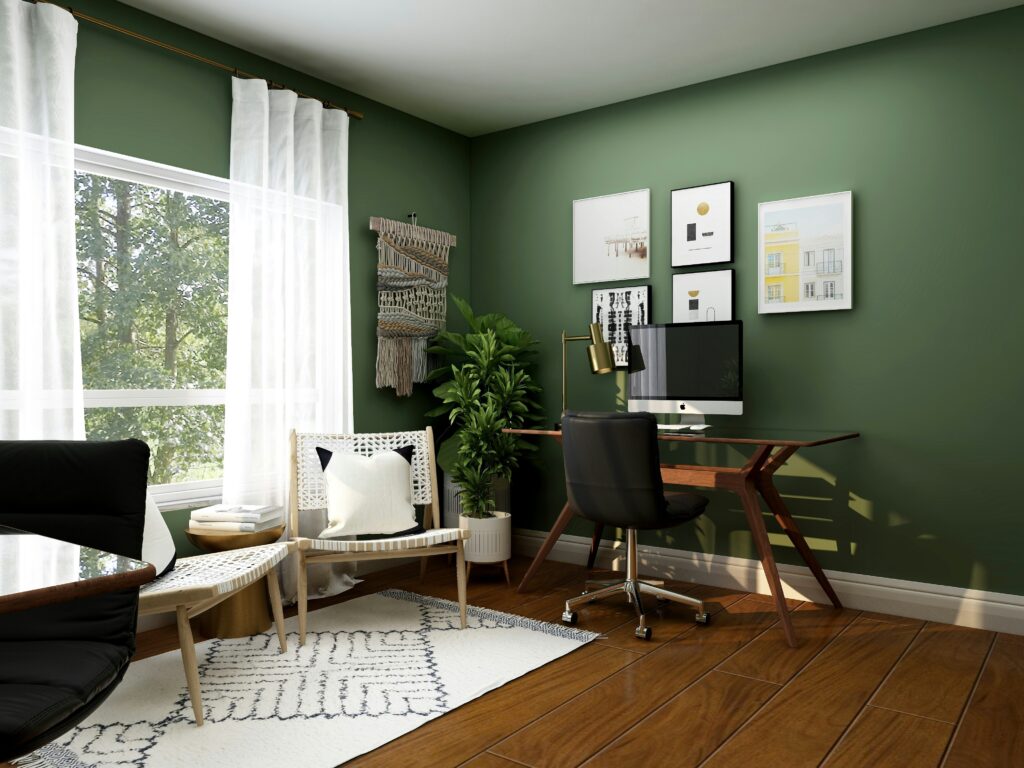
It could be a comfortable chair beside a window, a dressing table in the bedroom or a little reading area with a lamp and a small table. Add a few things you genuinely enjoy and make the space comfortable enough that you want to use it.
For parents in particular, this doesn’t need to be presented as some grand commitment to self-care. It can simply be somewhere to sit with a cup of tea after the children are in bed. If you get twenty uninterrupted minutes, consider it a luxury.
Don’t Try to Follow Every Interior Trend
Interior trends can be useful when you need inspiration, but following every new style can quickly become expensive and exhausting. A colour that appears on every design account one year can suddenly feel dated the next, leaving you wondering why you painted an entire room sage green when you never particularly liked sage green in the first place.
A better approach is to use trends selectively. If you love a particular colour, introduce it through cushions, artwork or smaller accessories rather than redesigning the entire room. Larger purchases should ideally be based on what you genuinely like and what will work with the rest of your home.
Timeless doesn’t have to mean boring. Natural materials, comfortable furniture, good lighting and personal objects can create a room that continues to feel attractive even when the latest trend has moved on.
Let the Home Change as Your Life Changes
Perhaps the most useful thing to remember is that your home doesn’t have to stay the same forever. A couple moving into their first house may have completely different priorities from parents with young children, and those priorities will change again when the children become teenagers.
There is no reason to feel guilty about changing a room because your circumstances have changed. A spare bedroom can become a nursery, an unused corner can become a home office and a formal sitting room can eventually become the place where everyone gathers.
These changes are not signs that the original plan failed. They are simply evidence that the home is doing what it is supposed to do.
A Comfortable Home Doesn’t Need to Be Perfect
The most welcoming homes are rarely the ones where everything is perfectly coordinated and nothing is ever out of place. They are the homes where people feel comfortable enough to sit down, stay for dinner and put their feet up without worrying about damaging something.
Good lighting, useful furniture, thoughtful gifts and personal accessories can all contribute to that feeling, but there is no single formula for getting it right. What matters most is creating a space that suits the people who actually live there.
So if the house currently has toys under the sofa, paperwork on the dining table and a lamp that has been irritating you for the last three years, don’t feel that you need to fix everything at once. Start with the things that would make everyday life a little easier or more enjoyable.
A few sensible changes can make a surprisingly big difference, and sometimes the home you enjoy most is not the one that looks perfect in photographs, but the one that feels good when you walk through the front door.