
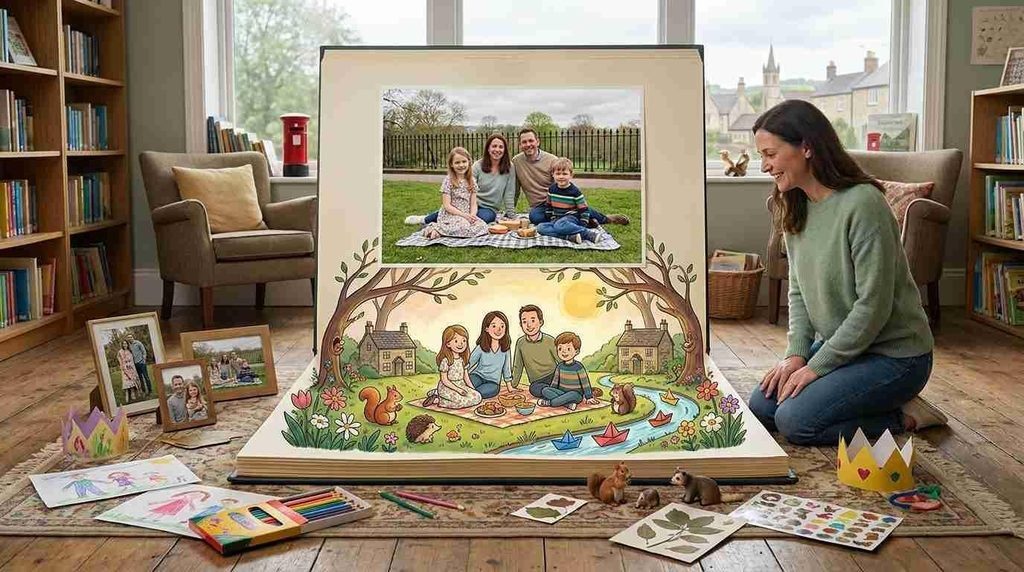
Turning a genuine family photo into a fun, cartoon-style keepsake, a birthday card, a bedroom print, a personalised gift for grandparents, has become a genuinely popular way for parents to celebrate everyday family moments without needing any design skill. An AI Cartoon Generator inbuilt within Higgsfield is part of how parent bloggers and everyday families are creating this kind of content, though it’s worth being genuinely thoughtful about how and where it gets shared.
Why Has Turning Family Photos Into Cartoon-Style Content Become So Popular?
There’s something genuinely charming about seeing a familiar family moment reimagined in a playful, illustrated style, a child’s birthday, a family day out, a pet curled up on the sofa. For parent bloggers specifically, this kind of content offers a fresh, fun way to mark milestones without the cost of hiring an illustrator, and for families more broadly, it’s become a popular way to create genuinely personal keepsakes, birthday cards, framed prints, or a personalised storybook cover, that feel more special than a plain photograph.
This appeal isn’t purely aesthetic either. A cartoon-style version of a family photo often feels genuinely more shareable within a close family circle precisely because it feels like a deliberate, thoughtful creation rather than a simple snapshot, the kind of thing a grandparent might actually frame and display, or a child might genuinely enjoy seeing turned into a keepsake of their own.
What Do Current Parenting Guidelines Actually Say About Sharing Children’s Images Online?
This deserves real, direct attention rather than a passing mention. Sharenting, the term researchers use for parents posting photos and information about their children online, is genuinely widespread, with surveys finding more than 75 percent of parents share content about their kids on social media, yet fewer than one in four actually ask their child’s permission first. UK academic research has specifically flagged real, documented risks tied to this practice, including identity-related concerns, with one recent survey finding 14 percent of parents reporting their child had already experienced some form of identity theft linked to information shared online.
This isn’t a fringe academic concern, it’s genuinely mainstream guidance now coming from children’s online safety organisations directly. The recommendation isn’t to stop documenting family life, which most parents and parent bloggers genuinely value and which has built real, positive communities over the years, but to bring the same intentionality to sharing a child’s image that most parents already apply to other decisions about their child’s wellbeing and daily life.
Why Does This Matter Even More Specifically When AI Tools Are Involved?
This is worth being direct about. Current research on children’s online privacy has specifically noted that AI image tools can now do considerably more with a single photo than they could even a couple of years ago, which means a child’s face shared publicly carries a genuinely different, higher level of risk today than it did previously. This isn’t a reason to avoid creating this kind of content altogether, plenty of genuinely thoughtful parents and parent bloggers do so safely, but it is a real reason to think carefully about where a finished piece of content actually ends up, not just how it was made.
This shift is genuinely worth pausing on rather than treating as background noise. The same underlying capability that makes an AI Cartoon Generator useful for a genuinely fun, low-cost family keepsake also means the broader landscape a parent is sharing into has changed meaningfully since many current sharenting habits were first formed years earlier, which is exactly why guidance that felt sufficient a few years ago is worth revisiting now rather than assumed to still fully apply.
What Does Genuinely Thoughtful Sharing Actually Look Like?
Parenting safety organisations consistently recommend a few concrete practices that apply directly here. Keeping shared content limited to a private, known audience rather than a fully public post meaningfully reduces risk compared to posting somewhere anyone can see and reshare it. Avoiding identifying details in a caption, a school name, a specific location, a full birthdate, matters just as much as the image itself. And for parent bloggers specifically, whose audience is often larger and less personally known than a typical family social media following, favouring private or family-only uses, a printed keepsake, a card sent directly to a relative, over broad public posting is a genuinely sensible default for content specifically featuring a child’s face.
None of this needs to feel restrictive or take the joy out of documenting family life, which is genuinely one of the best parts of parent blogging for a lot of people. It’s simply about matching the format of what gets shared to how public it actually needs to be, a keepsake for a grandparent doesn’t need to also be a public blog post, and recognising that distinction is often all it takes to keep the fun, creative part of this intact while genuinely reducing the risk involved for the child at the centre of it.
What Kinds of Content Are Families Actually Creating This Way?
Personalised birthday cards and party invitations are among the most common uses, turning a genuine photo of the birthday child into a fun, illustrated design without needing a graphic designer. Framed prints and bedroom decor are another popular use, giving a child’s actual likeness a playful, illustrated treatment worth displaying at home. Keepsake gifts for grandparents and other relatives round out the list, a genuinely personal alternative to a standard printed photo that a family member actually receives directly rather than something posted publicly at all, keeping the whole exchange within the family rather than online.
What Are the Traditional Options for Creating This Kind of Content?
Hiring an illustrator to create a custom cartoon portrait is one option, and it remains genuinely worthwhile for a special, one-off keepsake a family wants to treasure long-term. Using a general design app with basic filters is the more common DIY alternative, quick and free but often producing a fairly generic effect that doesn’t capture much of what actually makes the original photo distinctive.
Where Do These Traditional Options Fall Short for Everyday Family Use?
The constraint is cost and consistency. Commissioning an illustrator for every birthday card or keepsake a family wants to create simply isn’t realistic given the actual cost per piece, while basic filter apps tend to apply the same generic effect regardless of the photo, missing the specific details, an expression, a favourite outfit, a particular moment, that made the original photo worth using in the first place.
| Hiring an illustrator | Basic filter app | AI Cartoon Generator | |
| Cost | A real per-piece fee | Free | Included in one subscription |
| Captures specific detail from the photo | Yes, if briefed well | Often generic | Yes |
| Turnaround | Days to weeks | Instant | Minutes |
| Best suited for | A single, treasured keepsake | A quick, casual filter | Regular family content and keepsakes |
How Does an AI Cartoon Generator Actually Fit Into a Family’s Routine?
Higgsfield’s AI Cartoon Generator lets a parent take a genuine family photo and turn it into a polished, illustrated version within minutes, without needing design software or an illustrator’s fee for every occasion. For a parent blogger creating regular content, or simply a family wanting a nice keepsake for a birthday or a grandparent’s gift, that speed and low cost make this kind of personalised content realistic to create often rather than reserved for one special occasion a year.
What Must Parents Stay Genuinely Thoughtful About No Matter How Fun the Result Looks?
This is the single most important point in this entire article. Creating fun, illustrated content of a genuine family photo is a legitimate, enjoyable thing to do, but where that finished content actually ends up matters more than how it was made. Favour private, family-facing uses, a printed card, a keepsake sent directly to a relative, over public posting wherever possible, particularly for content clearly showing a child’s face. If sharing publicly does feel right for a specific piece of content, checking privacy settings, avoiding identifying details, and, where a child is old enough to have an opinion, actually asking them how they feel about it, are all genuinely worthwhile steps, not optional extras.
What Can a Parent Blogger Actually Produce Beyond a Single Cartoon Image?
Beyond one image, the same approach can support a consistent, recognisable style across a series of family keepsakes or blog content over time, giving a family or a blog’s readers something cohesive rather than a one-off novelty. This kind of thoughtful, personal content creation is exactly the spirit found across genuine parenting and family life writing, real, considered reflections on family life rather than content thrown together without much thought behind it. Higgsfield AI is a native AI creative suite, which offers advanced AI image, video, and voice generation, editing, and upscaling tools. This means a parent could also produce a short video recap of a birthday or family event from the same workspace.
Does This Replace a Parent’s Own Judgement About What’s Actually Appropriate to Share?
No, and this matters as much here as anywhere. What actually determines whether a piece of family content is appropriate to create and share is a parent’s own genuine judgement about their specific child, their specific audience, and what that child might feel about it now or in the future. An AI Cartoon Generator, whether Higgsfield or a comparable platform, speeds up producing fun, illustrated content from a real photo. It does not make sharing decisions, assess privacy risk, or replace the ongoing, thoughtful judgement that genuinely responsible sharenting requires from a parent every single time.
What Should a Family Look for Before Trying an AI Cartoon Generator?
A few practical things matter here specifically. Starting from a genuinely clear, well-lit photo tends to produce the best illustrated result, since the tool works from what’s actually in the original image. Deciding in advance whether a specific piece of content is meant for private, family-only use or something more public helps guide that decision before creating it, not after. And for parent bloggers specifically, being transparent with an audience about which content features their own children, and applying a consistently thoughtful standard across all of it, matters for the same reasons any genuinely responsible sharenting practice does.
What Are the Key Takeaways for Parents Considering This Approach?
- Turning family photos into fun, illustrated content is a genuinely popular, legitimate way to create keepsakes and personal content, but where that content ends up matters as much as how it was made.
- Real research shows most parents share content about their children online without asking permission first, and current AI tools genuinely raise the stakes of that decision compared to a few years ago.
- An AI Cartoon Generator like Higgsfield makes this kind of content genuinely easy and affordable to create, best used for private keepsakes and thoughtfully limited public sharing rather than default public posting.
- A parent’s own ongoing judgement about their specific child and audience remains the deciding factor in every single sharing decision, regardless of how the content was actually created.
What Are Some Frequently Asked Questions About AI Cartoon Generators for Family Content?
Is it safe to use an AI Cartoon Generator on photos of my children?
Creating the content itself is generally fine. The real consideration is where the finished piece ends up, favouring private, family-facing uses over broad public sharing is the more cautious, generally recommended approach, particularly for content clearly showing a child’s face.
Should I ask my child before sharing content that features them?
Parenting privacy guidance consistently recommends this, even for younger children who can express how they feel about a specific photo, since respecting a child’s own comfort with being shared online is part of genuinely responsible sharenting.
Do I need design experience to create this kind of content?
No. Uploading a real family photo and describing the illustrated style you want is enough to produce a usable result without any design background.
Is this only useful for parent bloggers, or does it help everyday families too?
It helps everyday families just as much, arguably more, since parent bloggers already think carefully about their content and audience, while a typical family creating a birthday card or keepsake benefits equally from the same easy, affordable approach, regardless of whether it’s produced through Higgsfield or a comparable platform.