
The health of our hearts often slips from our minds until something serious happens. Often, that something comes in the form of a lab report with many numbers highlighted in red. Your cholesterol may be high, or your blood pressure may not be quite where it should be. Even if these numbers aren’t in the danger zone, their red markings are more than enough to plant the seeds of worry in your mind.
You may be thinking to yourself: What do these results actually mean? Is it a sign of an incoming heart issue? What should you do next? To answer all of these questions, let us first look at what each marker means and how they work. Then, let’s work on figuring out a plan of action to help you maintain your heart health.
What do your cholesterol numbers mean?
More often than not, our cholesterol readings tend to get flattened into a rather simple story. High LDL bad, high HDL good, low total cholesterol good – people assume that these things by themselves mean your heart is well and good. But the truth is nowhere near fitting such labels.
People often think of LDL as the villain because its high levels are linked to plaque buildup in your arteries. This plaque is known to narrow our blood pathways and slow down its flow through the heart. Not only that, but it also puts us at risk of a heart attack or a stroke. While all this is absolutely true about LDL, it’s not painting the whole picture of your heart health – it doesn’t simply exist in a vacuum. From genetics, inflammation, and insulin resistance to our lifestyle, there is a lot that can impact its levels and how dangerous it may be to our health.
Similar to this are all the half-truths surrounding HDL. Its high levels suggest that our hearts can transport cholesterol away from the arteries to the liver. But a high HDL level alone must not be taken as a positive sign, especially if other risk factors have surfaced in the report. Total cholesterol works the same way. Two people with the same total cholesterol level can have wildly different risk profiles depending on how that number is composed and what else is going on in the body.
What does our blood pressure say about our heart health?
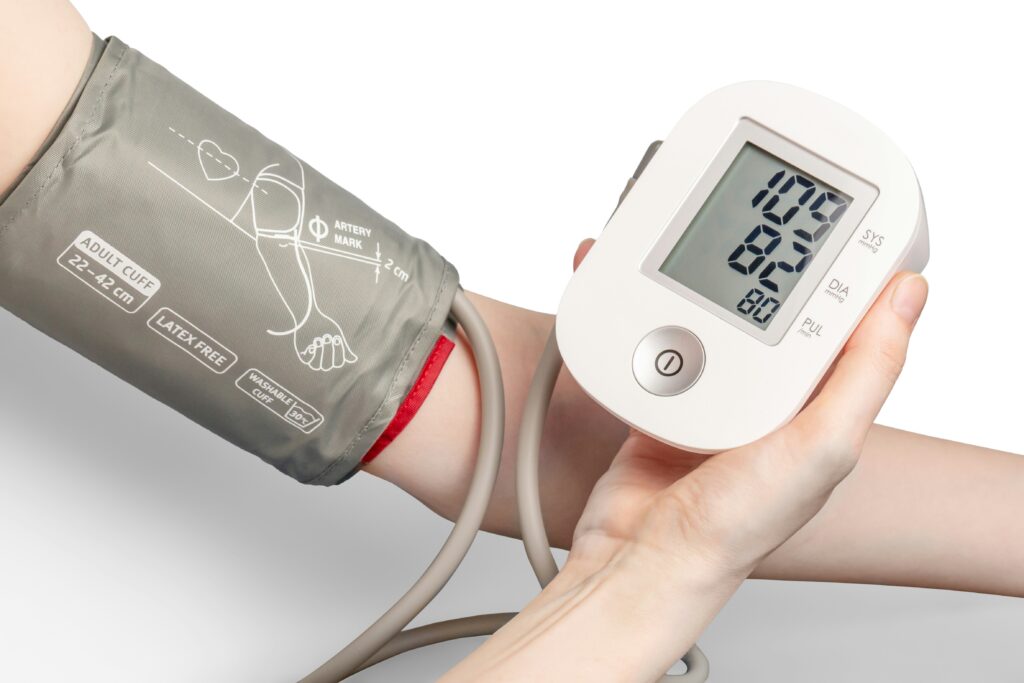
High blood pressure is one of those conditions that deals long-term damage to our heart, all while we feel perfectly fine at present. The reading you see on your report tells you how hard your heart is working to push blood through its arteries at the moment. If your systole and diastole readings don’t settle down in time, the high blood pressure will put a lot of strain on your artery walls, making them stiffer and weaker. This, in turn, created the perfect environment for our cholesterol to grow to dangerous levels. In a way, blood pressure and cholesterol are partners in crime. A bit of raised cholesterol, when combined with high blood pressure, is actually way riskier for your heart than one of these things on its own.
But one thing you may already be able to tell is that a single reading of your blood pressure can actually be a false alarm. After all, there are a lot of things in our modern lives, from stress, caffeine, to poor sleep, that can impact our BP. Even rushing to an appointment can raise your numbers. This is why you need to keep taking BP readings over time to actually know if everything is alright. Plus, if you’re seeing your numbers creep up over time, that’s basically a green light for you to start working on your health. A bit of lifestyle improvement, stress management, and regular exercise can be of more help than managing your hypertension when it’s well established.
How does your blood pressure and cholesterol readings translate into heart risk?
From what we’ve discussed so far, it is easy to see how both blood pressure and cholesterol results need a lot of context. Put simply, all these readings by themselves only sketch a rough outline of your actual health. To treat even one of these things as a standalone indicator of your heart health is to oversimplify a deeply interconnected system.
Now, heart risk is cumulative in nature – your age, family history, smoking status, weight, blood sugar, cholesterol, blood pressure, and inflammation all stack their effects to impact this organ. If several of these markers are even slightly off, it may just mean that you’re at a higher risk than you might initially think. This is also where misunderstandings around what your GP says happen. If they tell you that your results are nothing to worry about for now, that does not mean they are meaningless. What your GP’s words translate to is that, medically speaking, you haven’t crossed an arbitrary threshold that will warrant a routine of treatments and medicines.
From a prevention perspective, this can be quite troubling for many people. This is why many of them also choose to dig deeper and prevent the problem from getting any bigger by seeking a private heart check. It allows them to have longer consultations, repeat tests at shorter intervals, and clear all their health-related doubts. Obviously, this does not mean that the NHS is doing something wrong. Both of these systems simply have different goals for your health – prevention and intervention. It’s completely your call which route you choose between the two; both will get you the help you need.
What to do once you understand your numbers?
Now that you’ve likely stopped viewing cholesterol and blood pressure as isolated problems, it’s easy to see what your next step will be – reduce the strain on your cardiovascular system.
To achieve this, you first need to get the basics right. Get some consistent workouts, seek better sleep, figure out ways to manage stress, and adjust your diet to something healthier, one that you can consistently stick to. Just doing these few things alone will improve how your blood vessels function day by day. If it’s a little too tough to handle with lifestyle alone, you can try the medications to manage these conditions, but even then, you still need to combine them with a healthy lifestyle.
But most important of all, keep a regular check on these markers from now on. One lab report may just be nothing but noise, but multiple reports giving the same or worse results over time are a massive cause for concern. When you start tracking your heart health in real time, you’ll be better equipped to manage your risks proactively. That, more than any single result, is what will protect your heart in the long run.