
A dinner party only seems like a good idea on paper. In your imagination, every guest arrives on time and you calmly bring the main course to the table. In reality, one person is forty minutes late, another says they are not coming at all, and a third suddenly reveals some new dietary restriction. Meanwhile, someone else insists that the potatoes are somehow both raw and burnt.
I can remember dinners where the food was excellent, but the conversation never recovered after somebody decided to bring up politics. I have also been to fairly ordinary meals that turned into incredible evenings. Usually, someone opened the right bottle, everyone relaxed, and the whole thing began to feel like a normal conversation between friends, even if most of them had been complete strangers at the start of the evening.
Wine cannot bring moisture back to an overcooked chicken or remove too much salt from a sauce. It can, however, completely change the mood, give the guests something new to talk about and make an ordinary dish feel more complete. The point is not to give every bottle some kind of magical power. It is simply to know a few versatile styles that can help when dinner starts going off course.
The Sparkling Bottle That Bought Everyone Time
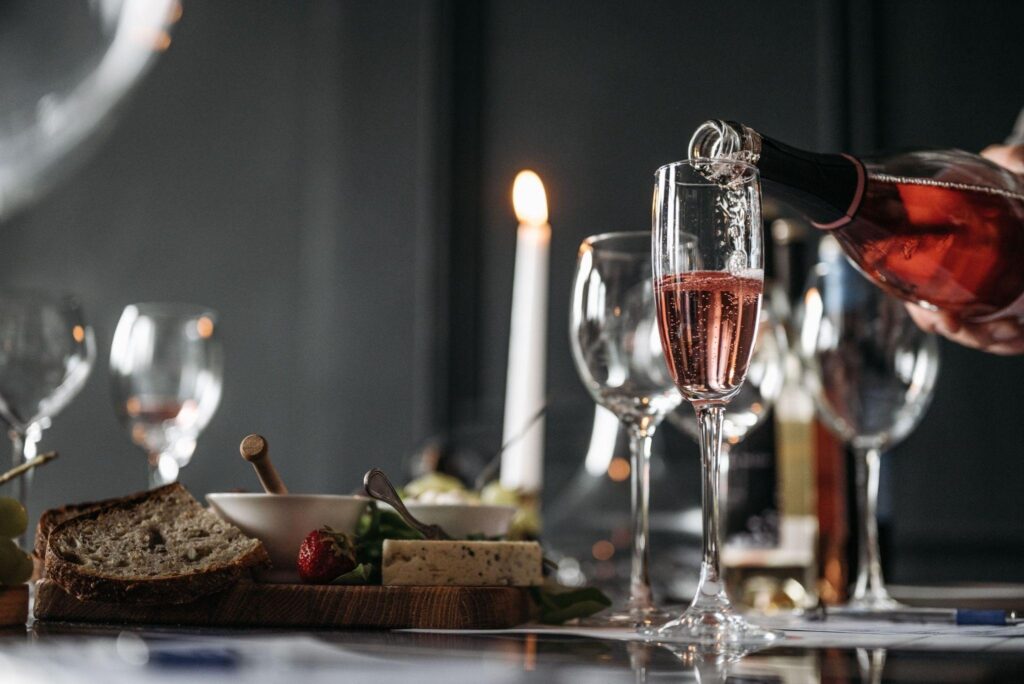
Sparkling wine is often the first rescue bottle. Not because the bubbles somehow make everything feel sophisticated, but because they create the impression that the evening has already begun, even when dinner is still nowhere near ready.
A dry sparkling wine works well with crisps, olives, salted nuts and most of the random snacks that might appear on the table. Its main advantage, though, is that it gives the host another twenty minutes during which nobody is staring expectantly at the oven. When the guests do not know each other well, the first few glasses can also help everyone get through the initial awkward silence.
A well-organised wine collection makes it easier to compare sparkling, white, red, rosé and dessert styles before the guests arrive, rather than choosing under pressure at the last minute. You don’t need a private cellar either. For a small dinner, a sparkling style for arrivals, a versatile wine for the main course and something suitable for dessert may be enough. The number of bottles, of course, depends on how many people are coming.
The Crisp White That Rescued a Heavy Starter
One of the less obvious trouble spots is the starter. The sauce may turn out richer than planned, the pastry may be too thick, or a supposedly light fish dish may somehow become a plate of butter. A fresh white wine can help balance some of that richness.
Sauvignon Blanc, Albariño, dry Riesling and unoaked Chardonnay are useful when a dish needs freshness rather than extra weight. They work well with seafood, goat’s cheese, salads, vegetables and creamy dishes, which makes them a practical choice even when the menu changes at the very last minute.
Serve the bottle chilled, but not so cold that the flavour disappears completely. There is no need to stand over it with a thermometer while your guests watch either. This is dinner, not a laboratory experiment. Cool it down a little and that will be perfectly sufficient.
The Light Red That Was Better Than the Main Course
Red wine needs a little more care, as too much body, alcohol or tannin can emphasise problems in the food. A very full-bodied bottle beside dry meat or an over-reduced sauce can make the whole meal feel even heavier. A lighter red, on the other hand, is usually far more forgiving.
Pinot Noir, Gamay and lighter styles of Grenache work well with roast chicken, pork, mushrooms, sausages and tomato-based dishes They have enough flavour to feel like proper red wines, but they are not so powerful that they overwhelm food already having a difficult evening. Some of them are also very good slightly chilled, which is especially useful in a hot room after the oven has been running for several hours.
Perhaps you have been to a dinner party where the steak tasted more like a piece of wood than meat. Pinot Noir will not make it tender, of course, but the wine may give everyone something better to focus on than the steak.
That is exactly what a rescue bottle is supposed to do. It does not need to create a perfect food pairing. It is enough for it to appeal to most of the guests, work reasonably well with the dishes and help the evening move on.
When a Fuller Red Works With a Simple Main
A simple stew or pasta bake may be perfectly edible but still lack depth. If the dish has enough savoury weight, a ripe, balanced red can make the combination feel more complete. The key is not to choose a wine powerful enough to bury the food altogether.
Rioja, Cabernet Sauvignon, Malbec and Syrah are all natural matches for beef, lamb, slow-cooked dishes, hard cheeses and roasted flavours. Even so, choosing the most powerful bottle available is not always the smartest strategy. An overly intense red can completely overpower the food, especially if some of the guests rarely drink wines of that style. A generous but balanced option is usually much safer.
If the dish has turned out far too spicy, however, a full-bodied red is unlikely to help. In fact, it may make the heat feel even stronger. A fruity white with a little sweetness will be a much friendlier choice. You can also put yoghurt or bread on the table and pretend that was always part of the plan. High alcohol and firm tannins can make chilli heat feel more intense, while a small amount of residual sugar can soften the sensation.
The Rosé That Refused to Care About the Menu
For some reason, rosé has developed a reputation as a drink reserved for summer afternoons by the pool. Quite unfairly, it has to be said. A dry rosé can be one of the most useful bottles at a dinner party because it sits comfortably somewhere between white and red.
It works well with charcuterie, salmon, chicken, grilled vegetables, Mediterranean dishes, mild curries, improvised buffets and plenty of other food. In other words, it is something of an all-rounder. When half the guests want white and the other half prefer red, rosé also becomes a perfectly sensible compromise.
Another clear advantage is that it rarely demands much attention. When the evening is already busy enough, a bottle that does not require a lecture on soil types before it can be opened is exactly what you need.
The Sweet Bottle That Made Dessert Look Deliberate
Dessert is quite literally the cherry on top. It may not seem like the most important part of the meal, but it often shapes the final impression of the evening.
A sweet wine can turn a disappointing dessert into something that looks almost intentional. Sauternes, Tokaji, sweet Riesling, Moscato and fortified wines all have enough character to accompany pudding properly. One useful rule is not to serve a wine that is less sweet than the food, as it may taste unpleasantly sharp by comparison.
If your sponge has collapsed, add some fruit, cream and a small glass of dessert wine, then claim that was the plan all along. Burnt edges can easily be trimmed away, while ice cream is capable of hiding an astonishing number of problems. Nobody needs to know what the dessert was originally supposed to look like.
Port works well with chocolate, blue cheese and the final stage of the evening, when everyone insists they are completely full but somehow still agrees to have one more thing.
Keep an Emergency Bottle, Not an Emergency Cellar
Even then, there is no need to build an enormous collection of bottles in case dinner goes wrong. A few versatile options will be far more useful than expensive wines chosen for one very specific dish.
A practical selection includes:
- one dry sparkling wine for arrivals and delays;
- one fresh white for starters or creamy food;
- one light or medium-bodied red for the main course;
- one sweet or fortified wine for dessert and cheese.
Check everything the day before. Chill the white and sparkling wines, make sure the corkscrew works and count the glasses. Yes, it all sounds like boring housekeeping, but only until six guests are watching you try to open a bottle with a kitchen knife. Prepare a proper alcohol-free option as well. Nobody should have to explain why they are not drinking, and their choice deserves a suitable glass rather than a mug you once won at an office party.
The Bottle People Remember
A dinner party should not feel like restaurant service that has somehow been moved into your home. The food may be late, one of the dishes may not turn out as planned, and somebody will probably tell a story that leaves the whole table feeling awkward. None of that means the evening is ruined.
The most useful bottles are not always the rarest or most expensive. More often, they are the wines that work well with the food, appeal to the people around the table and finally allow everyone to relax. Sparkling wine can help cover a delay, a fresh white can lighten an overly heavy starter, a lighter red can avoid making dry meat feel even heavier. A sweet wine can make a disappointing dessert look far more successful.
Be prepared for the evening to go differently from the way you imagined. There is no need to apologise for every plate. Simply open a suitable bottle, pour wine for anyone who wants it and finally sit down with your guests. They are far more likely to remember the laughter, the conversation and a bottle they enjoyed than the potatoes that happened to burn.