
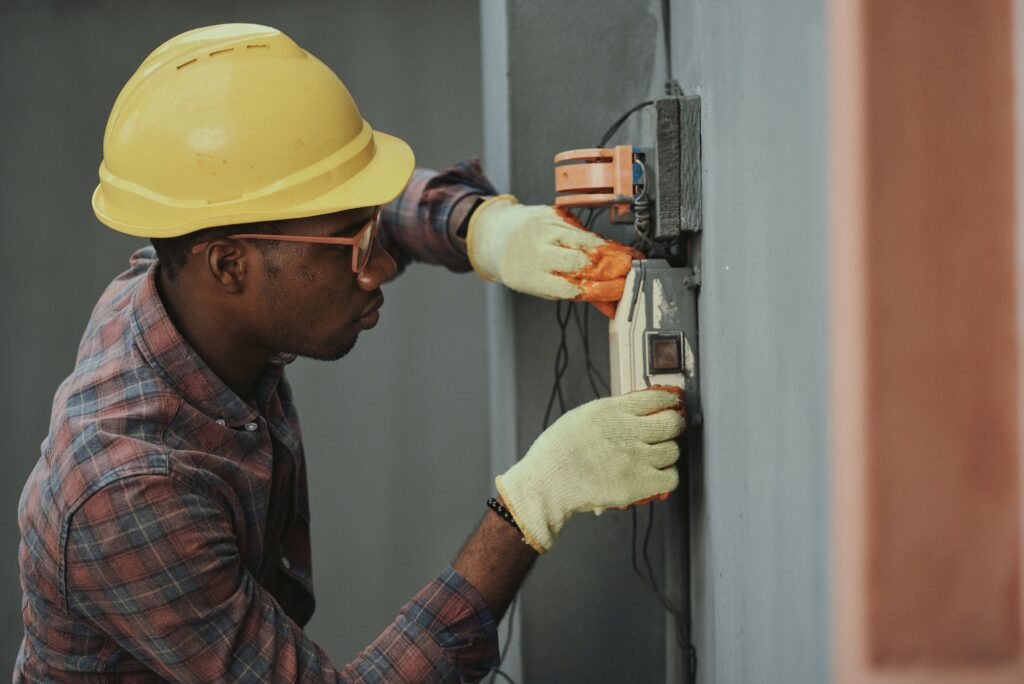
This is a collaborative post: Society is always in need of more and more electricians due to the fact that we all rely so heavily on electrical power.
Even though a career as an electrician is highly specialized and requires training, experience and specific qualifications, the financial benefits are extremely lucrative.
In this article, we will be looking at what it takes and what is required to pursue a career as an electrician.
What does an electrician do?
An electrician is a specialized occupation that deals with all issues linked with electrical power. These issues can range from fixing electrical equipment to fixing and maintaining electrical wiring.
Due to the practical nature of the electrician profession, problem-solving, patience and communication skills are required.
Also, an electrician should have a good understanding of mathematics and physics due to the fact that this role involves taking measurements and calculating power/voltage.
Below are a series of examples of some of the services a qualified electrician can provide for a homeowner:
- · Fitting lights and sockets
- · Rewiring (This could range from rewiring a smaller older system to the whole property)
- · Replacing a fuse box
- · Performing a safety inspection
- · Fixing electrical consumer devices
- · Finding and fixing faults in home electrical systems
The average day rate for an electrician ranges from £200-250 a day but this can vary depending on location, experience and employment status.
For a more extensive look into how much electricians charge, we recommend checking out this article.
How to become an electrician
There are several routes one can take to become a qualified electrician. This process can take several weeks or several years depending on the kind of electrician you want to become.
Depending on the number of GCSEs you take/have taken will determine what college course you can enroll in.
- With two GCSEs level 9 to 3 (A* to D), you can enroll in a level 2 college course.
- With four to five GCSEs level 9 to 3 (A* to D), you can enroll in a level 3 college or a T (technical) level course
We recommend you explore the options and find out which path best suits you.
The quickest way to become an electrician is to complete the domestic electrical course. This will only take about a month to complete and by the end, you will be a ‘trained domestic electrician’.
Even though you won’t be a fully qualified electrician, you will be able to perform residential jobs such as rewiring a house or installing light fixtures.
To become a fully qualified electrician, you will need to gain the correct qualifications as well as the appropriate work experience.
You should enroll in either a level 2 diploma in electrical installation, a level 3 diploma in electrical installation and electrical engineering or a T level qualification (this should be chosen, if you are interested in becoming a highway, installation or maintenance electrician).
On the other hand, you could also complete an apprenticeship. This will gain you work experience whilst under the supervision of a qualified electrician. This is a good way into the industry.
Apprenticeships are open to anyone over the age of 16. As an apprentice, your time will be split between on-the-job experience and a college or training provider. It should be noted that you can also train to become an electrician through an apprenticeship in the armed forces.
After gaining work experience as well as a level 2 or level 3 college qualification, you will need to complete the AM2 assessment. Once you have all of this, you will finally be a qualified and licensed electrician.
Demand for electricians
According to the UK trade skills index of 2023, by 2032 there will need to be 937,000 new workers in construction and trade to meet the growing demand. In part of hitting that target, over 47,000 electrician apprenticeships needed to be completed each year to prevent a worker shortage. As we grow more reliant on electricity in our houses and also in our cars, electricians will be more vital than ever in the next decade.
Need more information on the main jobs electricians work on? Check out My Local Toolbox