
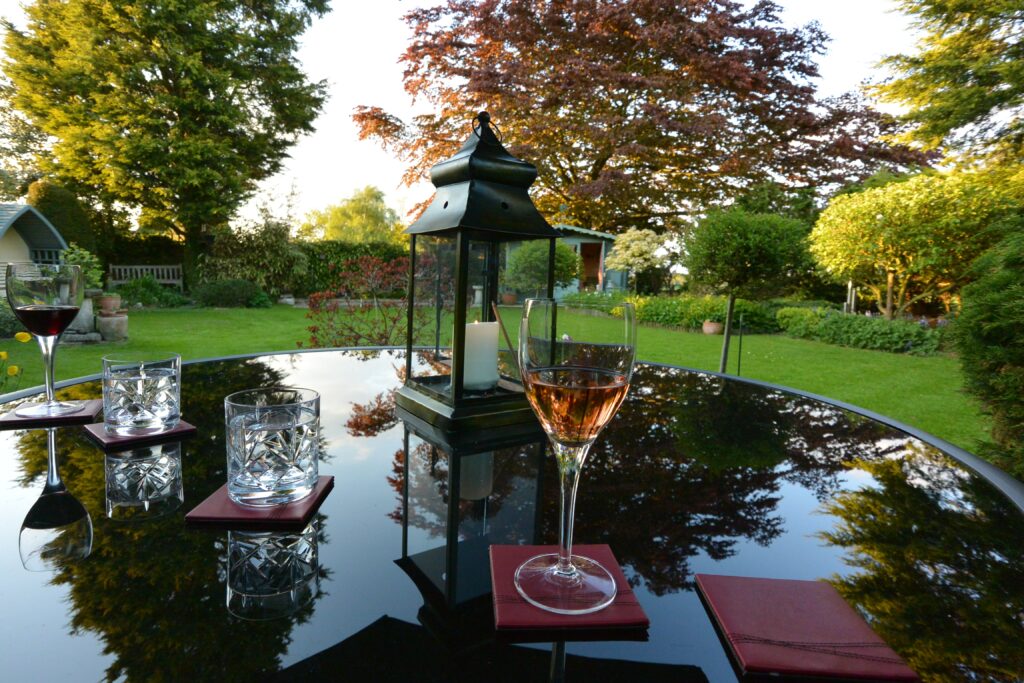
This is a collaborative post: Having a drink in the garden – with friends over a barbecue, with your partner after work and late into the evening, or perhaps on your own while lounging with a good book – is one of the highlights of a British summer.
Usually my drink of choice would be a nice chilled New Zealand Sauvignon Blanc; nothing quite gives that relaxed feeling as quickly as that first sip of wine. But never fear, if you’re trying to cut down on your alcohol intake for whatever reason, there are plenty of low alcohol and alcohol free alternatives you can try.
Is it really alcohol-free?
Depending on your reasons for not drinking, be it needing to get up at an ungodly hour the next morning, a bun in the oven or something else, understanding how drinks can be described is incredibly important.
The UK Government gives the following guidance for drinks with little or no alcohol:
Low alcohol – the drink must be 1.2% alcohol by volume (abv) or below and an indication of its maximum abv should be included on the label.
Non-alcoholic – this should not be used in conjunction with a name commonly associated with an alcoholic drink. There is an exception for non-alcoholic wine where it is derived from unfermented grape juice and is intended exclusively for communion or sacramental use. The labelling or advertising of these non-alcoholic wines should make it clear that it is exclusively for such use.
Alcohol free – this should only be applied to a drink from which the alcohol has been extracted if it contains no more than 0.05% abv, and the products should also include the abv (or state that they contain no alcohol) on the label in order to use the descriptor.
De-alcoholised – this term should only be applied to a drink from which the alcohol has been extracted if it contains no more than 0.5% abv and the product should also include an indication of its alcoholic strength (or state that it contains no alcohol).
It’s worth bearing in mind that these descriptions are voluntary for brands to use, and imported drinks might have different labelling. E.g. American beers with an ABV of 0.5% or under can be classed as alcohol-free. If absolutely no alcohol is a necessity, trust the ABV rather than a description.

Cordial
Elderflower cordial is a personal favourite when it comes to non-alcoholic drinks. A more adult drink than a pint of orange squash, you can add sparkling water and cucumber, mint and strawberries to jazz it up a bit.
Serve over ice in a large gin glass and you’ll soon forget that it’s not a real cocktail. You can even make your own elderflower cordial, if you’re so inclined.
Sparkling tea
Tea might seem like a strange alternative to wine but don’t knock it til you’ve tried it! Non alcoholic kombucha sparkling tea is made by naturally fermenting loose-leaf teas to create a range of refined, elegant sparkling beverages which are low in calories and sugar, and contain no alcohol. Available in 750ml bottles, it’s the perfect wine alternative for a sunny day.
Low and no alcohol wine
If you aren’t shunning alcohol completely but want something that won’t leave you feeling fuzzy, be on the lookout for Moscato d’Asti. It’s sweeter than Prosecco but has a similar lightness and fizz. Typically it has an ABV of around 5.5% compared to Prosecco’s 12%.
If it’s zero alcohol and a refined wine-like taste you are after, Jukes Cordialities could be your option. Pour yourself (a wine glass) of water (sparkling, still or tonic), and then add half a bottle (15ml) of Jukes magic potion to it. It is completely plant-based, and uses apple cider vinegar as a base along with an array of herbs, spices, and fruits to create an alcohol free drink on par with your favourite vino.
You can get substitutes for white, red and rosé wine. The dinky bottles make two 125ml glasses each and are easy to slip into a bag and take with you if you aren’t sure of the provisions at a barbecue or garden party.
Alcohol free beers
When watching your waistline, beer is often one of the first things you can be told to give up. It’s pretty calorific, not to mention a bit too easy to put away more than one or three. There has been an explosion of light beers on the market recently with almost all major brands offering up options that are low in calories and alcohol.
Light beers have been a big business in America for a long time, however now UK beers and lagers are following suit, with many having the same crisp and refreshing taste of its alcoholic siblings, but a big fat zero when it comes to its ABV meaning you can still enjoy a summertime shandy without worrying about a thing.
Non alcoholic spirits
Lastly, the hardest drinks of all (in both name and taste), spirits. How do you mimic the taste of something like vodka or gin? Unless you genuinely like the taste of these heavy hitters solo, I honestly think the best thing to do is find yourself some good mocktail recipes instead.
There are several low-alcohol and alcohol-free spirits in the shops. I’ve tried 0% gin and it did have a lovely botanical flavour but considering that their price is pretty much equal to the real deal, it isn’t something that I would personally buy.