
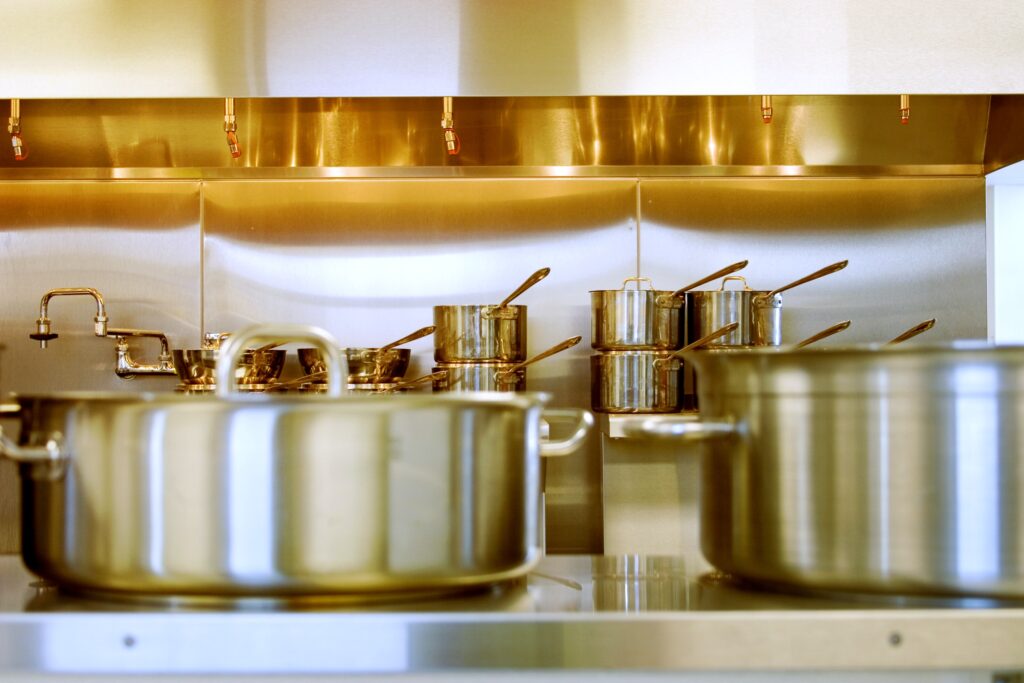
This is a collaborative post: Stainless steel cookware is one of the most durable kinds of cookware. Particularly, in comparison to many other varieties available, including normal non-stick cookware, stainless steel varieties are durable and, more often than not, sturdier. They are pretty versatile, and a good quality stainless steel product will offer corrosion resistance and low-maintenance care in addition to their long life-spans.
In this article, we’ll be discussing how to cook with stainless steel pots and pans and tips for ideally using them. Read on and add to your kitchen skills. Do you think you have any additional suggestions or tips that the rest of us here could use? Feel free to drop your thoughts in the comments section.

Cooking with stainless steel pots and pans
This would depend quite a bit on the type of utensil you buy and the thing you are cooking. If you have a heavy-bottom pan or pot, you can keep a high flame when needed. But in case it’s relatively thinner cookware, you will have to be careful with the flame level. Particularly, with the non-stick varieties, we’d recommend keeping a low-medium flame for cooking.
To prevent food from sticking to the surface
We had compared the durability of the stainless steel utensils against the non-stick varieties. But, the only major setback with this category is that they are not non-stick- food getting stuck to the surface of the pan or pot can be an irritant to many. It further adds to the cleaning work. But, thankfully, there are certain things that you can do in order to try prevent or minimize that. The simplest thing you can do to prevent your food from sticking to the stainless steel pots and pans would be to grease the utensil and adding salt. When you add oil, it will act as a thin layer of protective barrier between food and the utensil. With a bit of oil, you can prevent a lot of mess of stuck food.
Taking care of the stainless steel pots and pans

Thankfully, there isn’t much to take care of with stainless steel pots and pans, unlike the glass-made or non-stick counterparts. You can give a pretty rough and tough treatment to these sturdy items, whereas you need to handle the many other cookware kinds with a lot of care and relatively much delicately. With stainless steel pots and pans, you don’t have to worry about a layer coming off, getting scratched if using the wrong spatula or tool or of getting the utensil over heated. Further, you don’t need to worry about getting special types of chemicals or cleaners for cleaning stainless steel pots and pans.
You can just normally clean the stainless steel utensils with any usual soaps or utensil cleaners and use just about any kind of tools with them. They can meet quite a lot of your cooking requirements as well.
Quick tips, Dos and Don’ts for stainless steel pots and pans
- Avoid non-stick sprays on pans. While they seem to be a great choice initially, those things will eventually build a thin layer of those chemicals, which will, on the contrast, cause more food to stick to the cookware.
- Clean utensils as soon as you can after using it. It would be easier to clean immediately after using it.
- We did say that you can be rough and tough with stainless steel pots and pans. However, note that there are a lot of varieties where stainless steel cookware comes with an additional non-stick coating. In such cases, it would be ideal to treat them with a bit of delicacy. Though you can still use utensils of your choice, the recommended choice would be silicon or wood spatulas or spoons. Also, when cooking, use medium heat for this variety.
- For lasting or hard food stains on your stainless steel pots and pans, go old-school. Using baking soda and water to clean would be an easy an effective method to get rid of tough food stains.
- Avoid putting cold food in. We usually heat the pan up properly before adding food to it, right? Adding cold food would just work against the heat. Try bringing things close to the room temperature before adding them into the pan.